
Honoring George Ross, Lancaster’s Only Signer of the Declaration of Independence – Part III: Preparation and Installation of the Ross Home Doorframe
Preparing the Ross Home Doorframe for Display
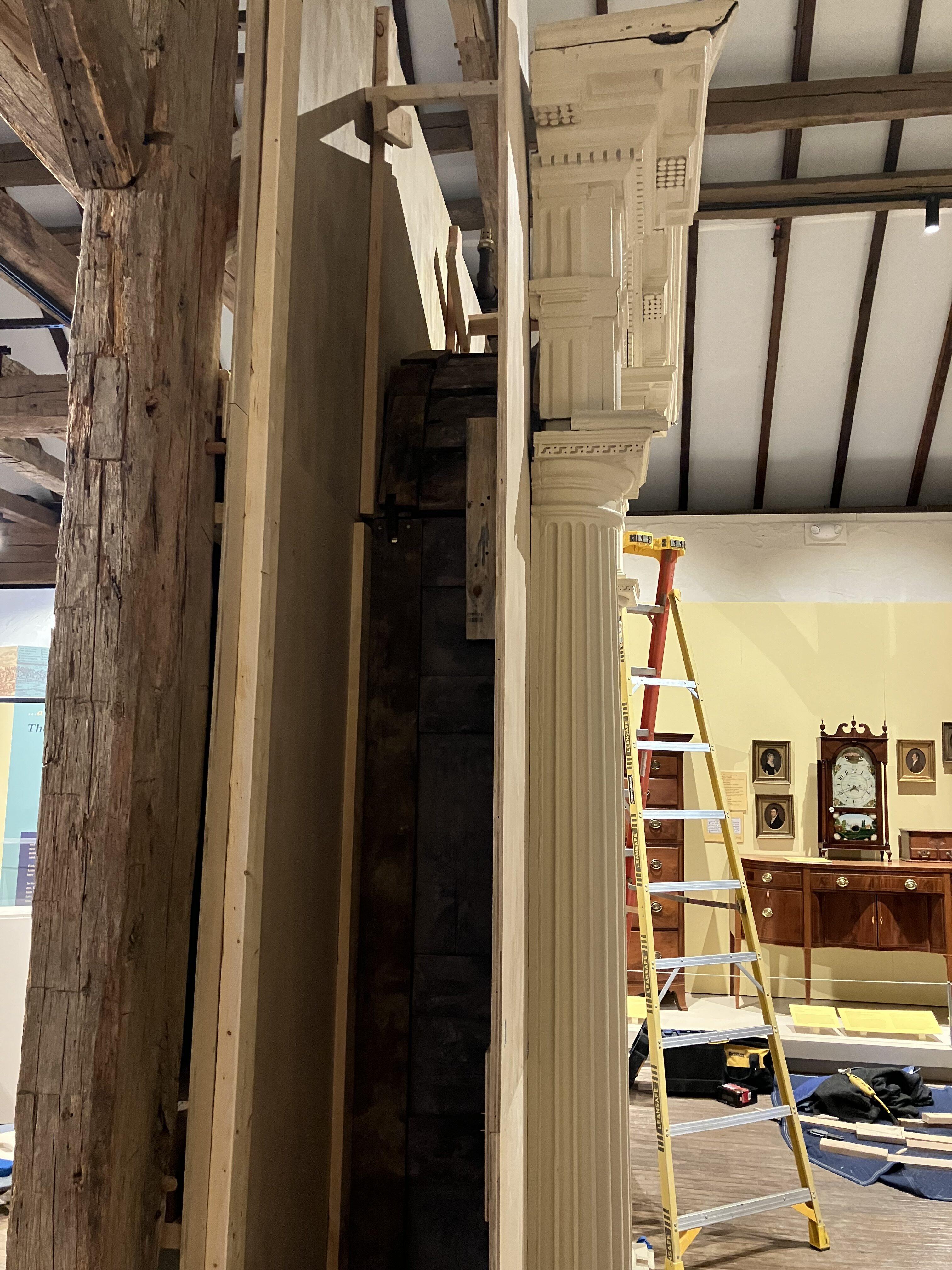
The doorframe from the colonial-era George Ross home is finally in place! Although it has undergone a number of repairs and changes over the years, it still remains one of the most important and elaborate architectural elements to have survived from the eighteenth century. The much traveled doorframe not only graced the home of George Ross but was later incorporated into the home of his great-granddaughter Ann Coleman Hopkins. Following demolition of that home in the early 1960s, the piece was put in storage for many years before being placed on display in the Heritage Center Museum of Lancaster County. Put in storage once again when the Heritage Center closed at the end of 2011, the piece is now on loan to Historic Rock Ford, the home of General Edward Hand, as a centerpiece for their Lancaster’s Revolutionaries display opening April 1 in the John J. Snyder, Jr. Gallery of Early Lancaster County Decorative Arts.
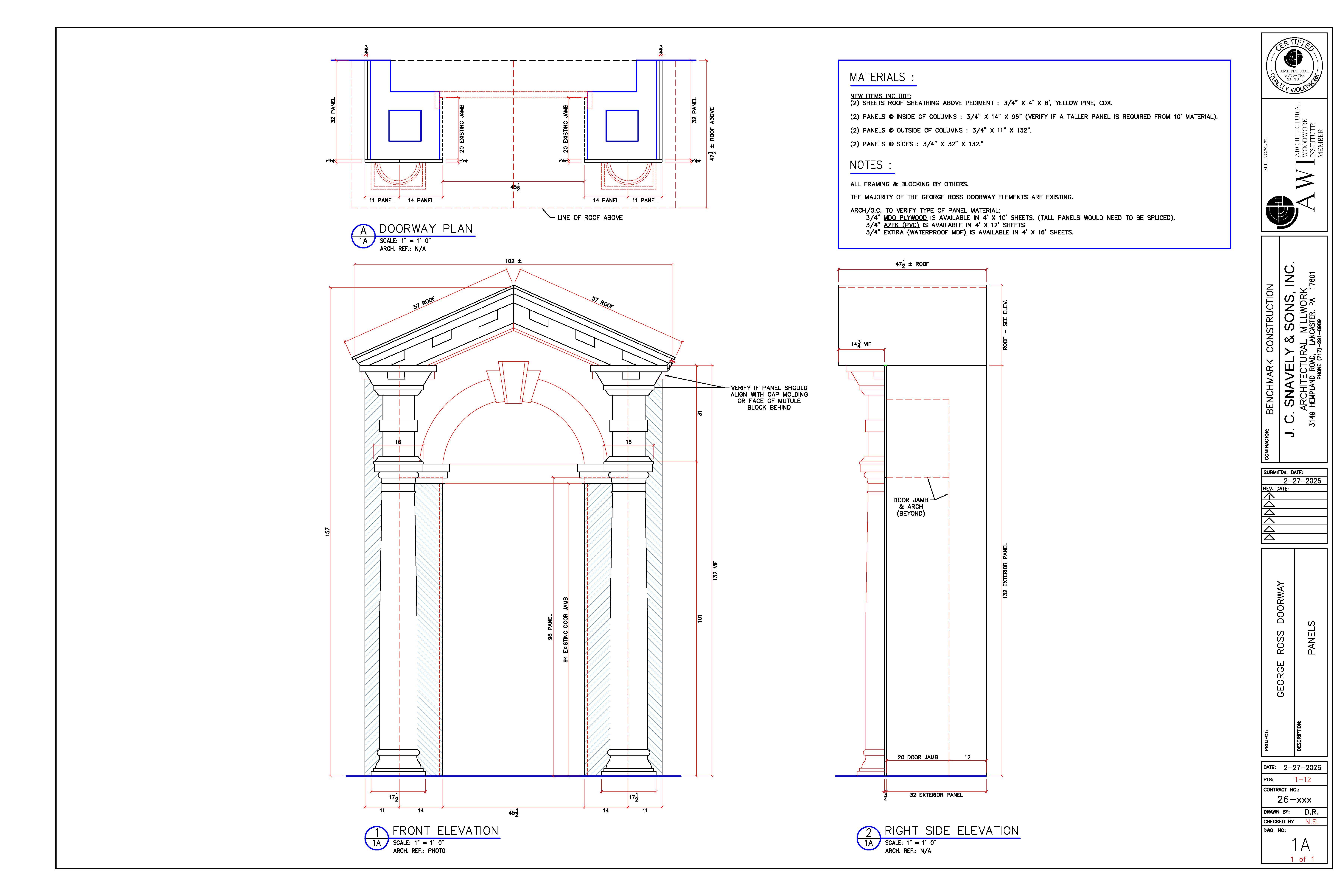
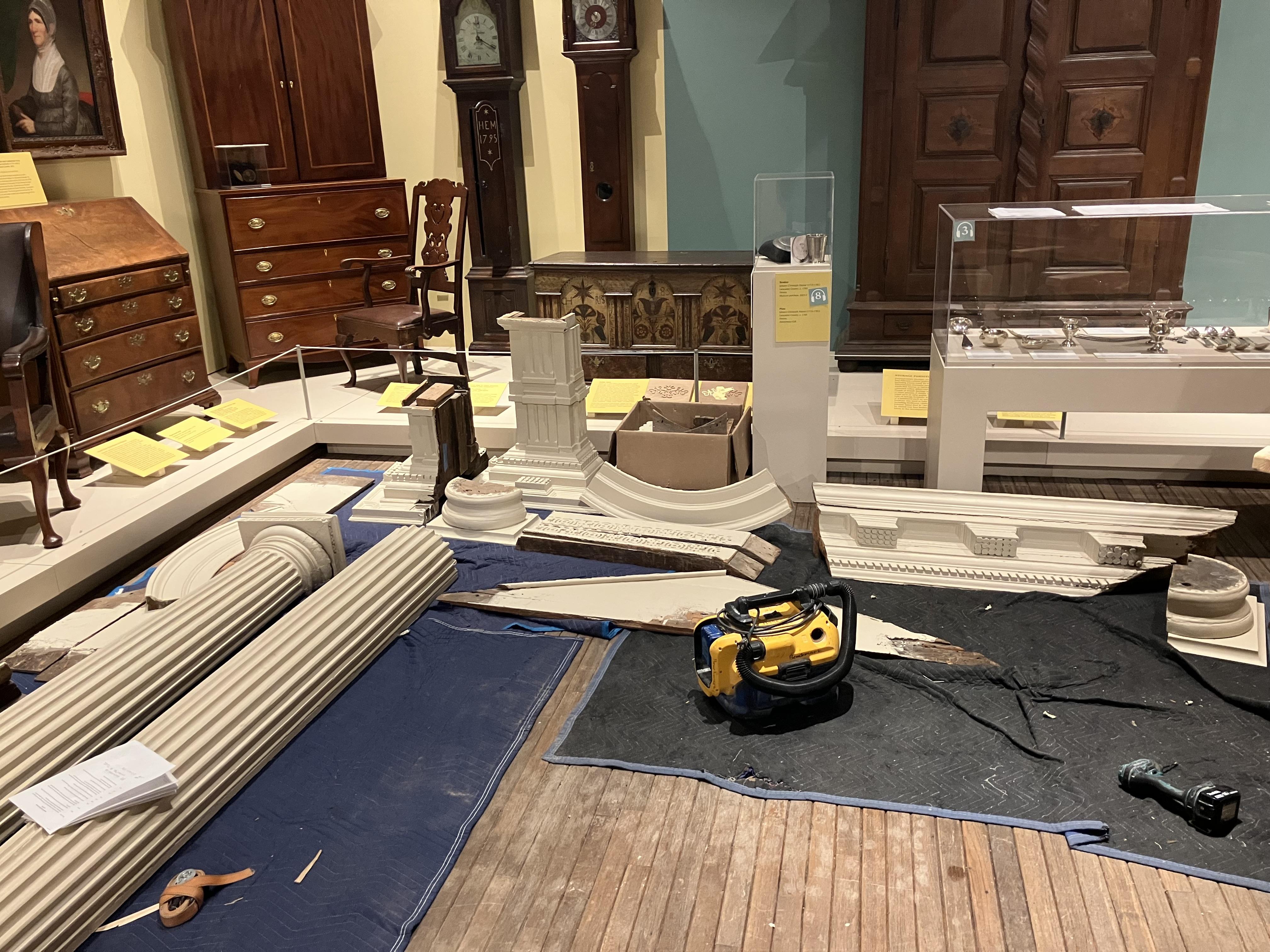
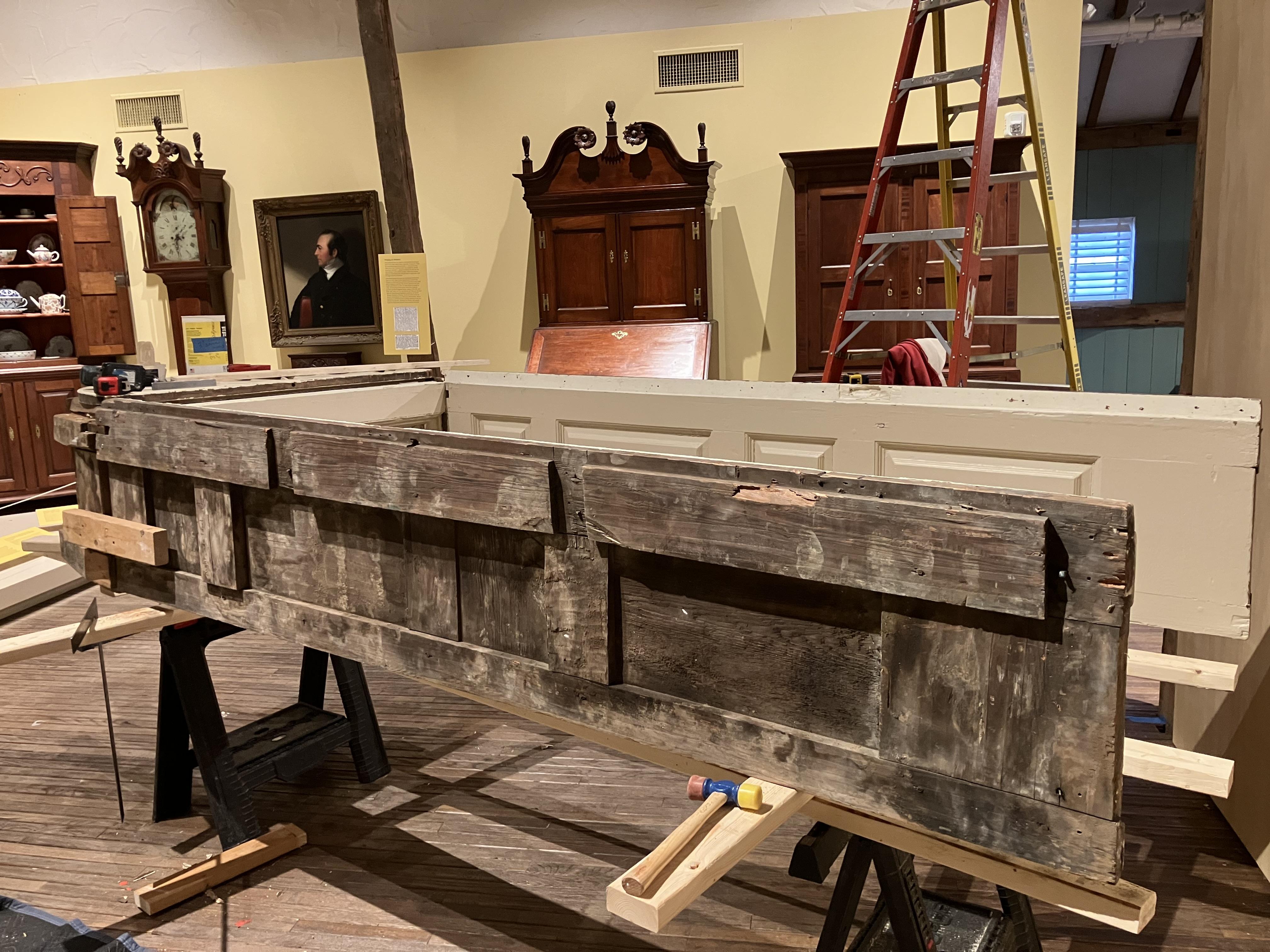
The difficult task of reassembling the Ross doorframe for display at Historic Rock Ford was entrusted to local contractor Benchmark Construction. Local building materials supplier J.C. Snavely & Sons produced this scale drawing to aid Benchmark in making repairs, fabricating missing or damaged parts, and properly framing and aligning the finished product.
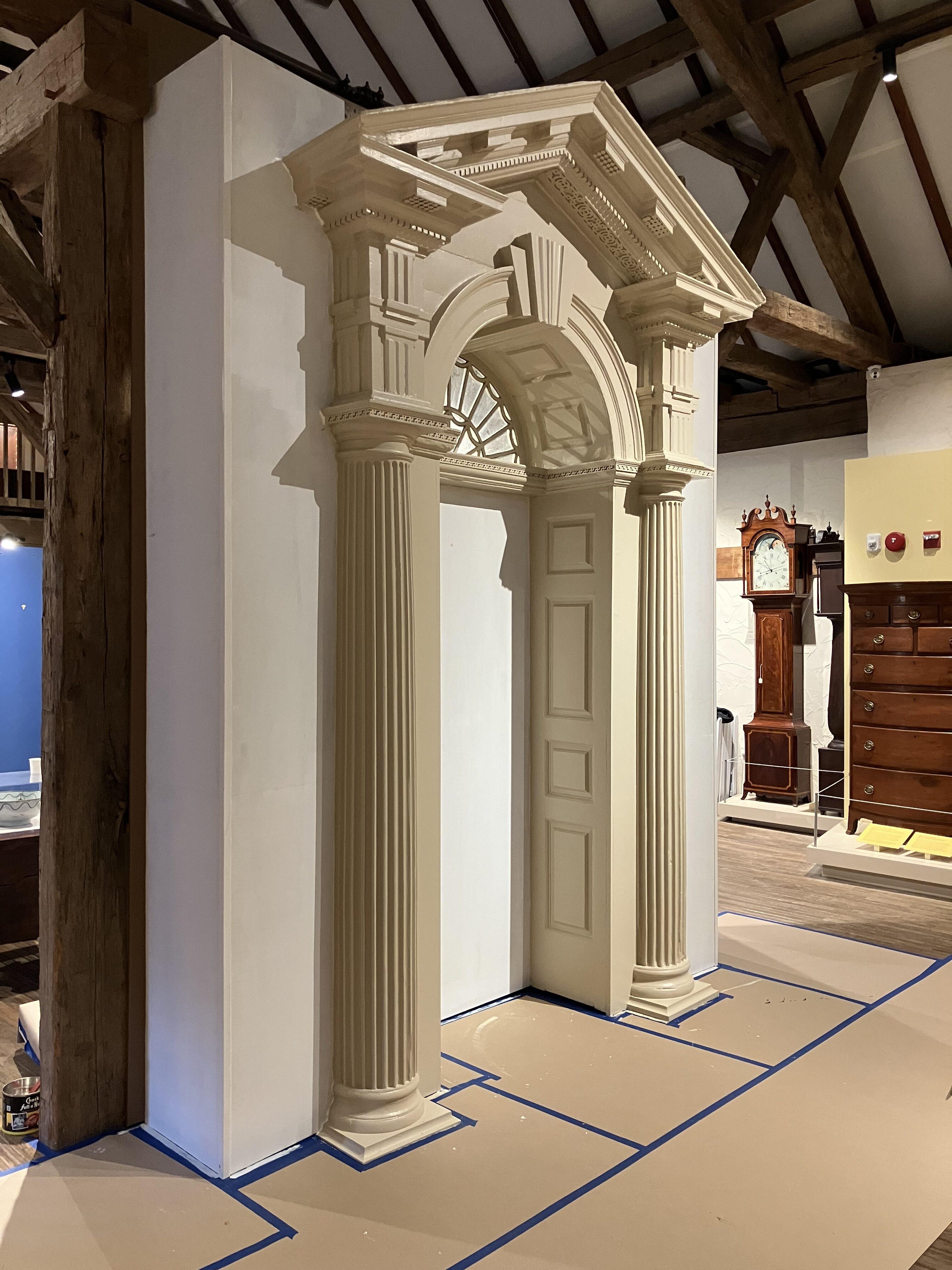
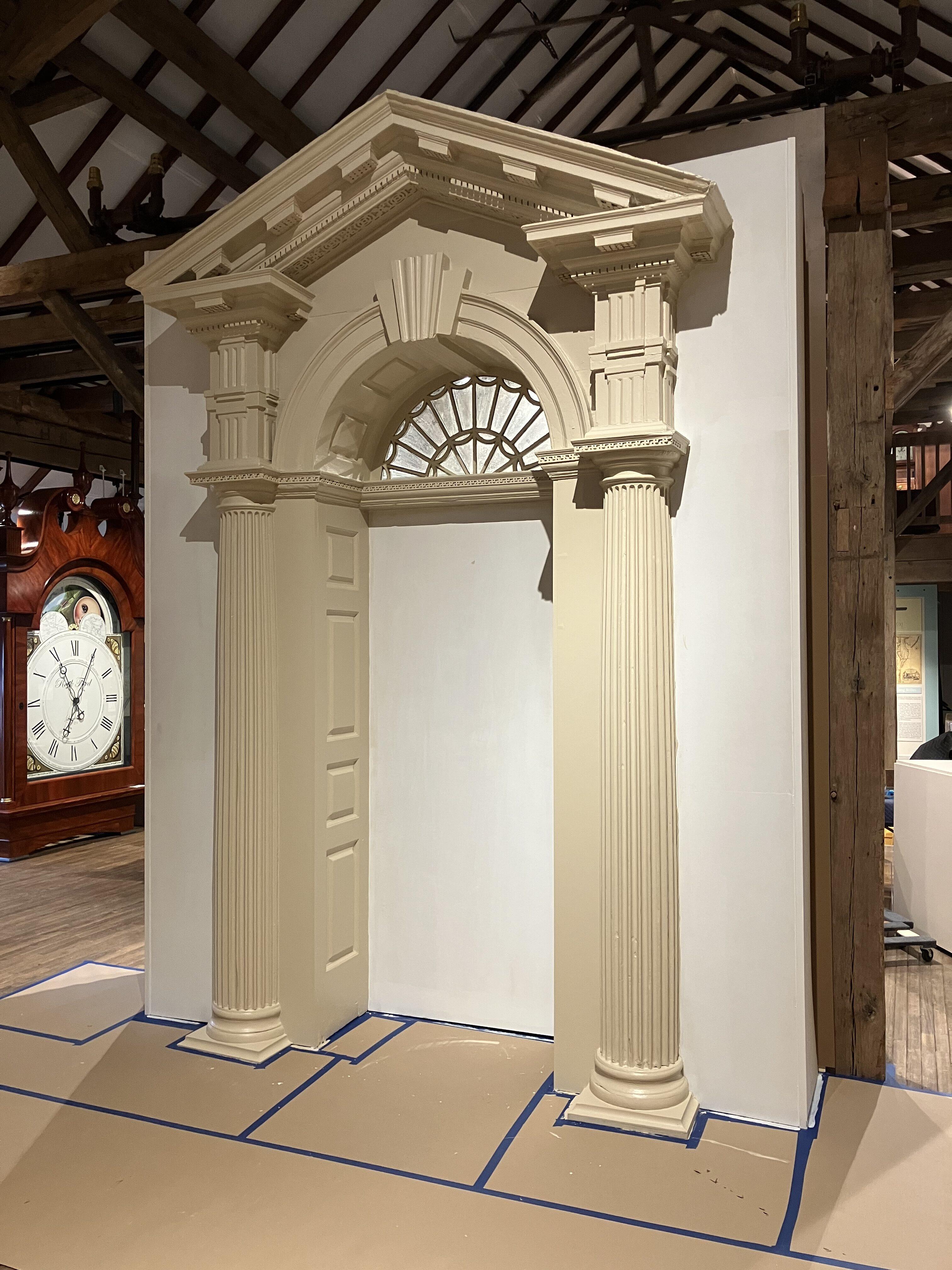
Everything’s In Place But the Final Coat of Paint
The George Ross doorframe is monumental in size. When assembled, the piece stands over 13 feet in height and is nearly 9 feet in width. The deepest part of the pediment extends nearly 4 feet from the framing support. The majority of the piece is made of yellow pine although the two columns appear to be made of walnut. Prized for its strength, durability, and availability, yellow pine was a dominant structural and finish material in American homes from the colonial period through the early twentieth century. Because of the number of changes and modifications made to the doorframe over the years since its original construction in the 1760s, it is difficult to say with any degree of certainly how much of the doorframe actually dates to the colonial period. What is certain, however, is that the piece represents a tangible connection to the colonial past of Lancaster and serves as a reminder of the social and political connections between George Ross and Edward Hand – two key figures during the colonial period and two of Lancaster’s most important revolutionaries.
From Object Lessons