
A Lock of George Washington’s Hair….. Maybe
A Cabinet of Curiosities
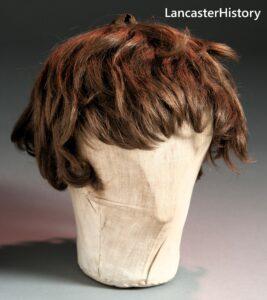
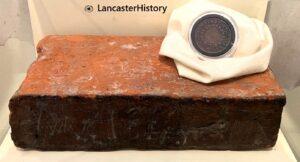
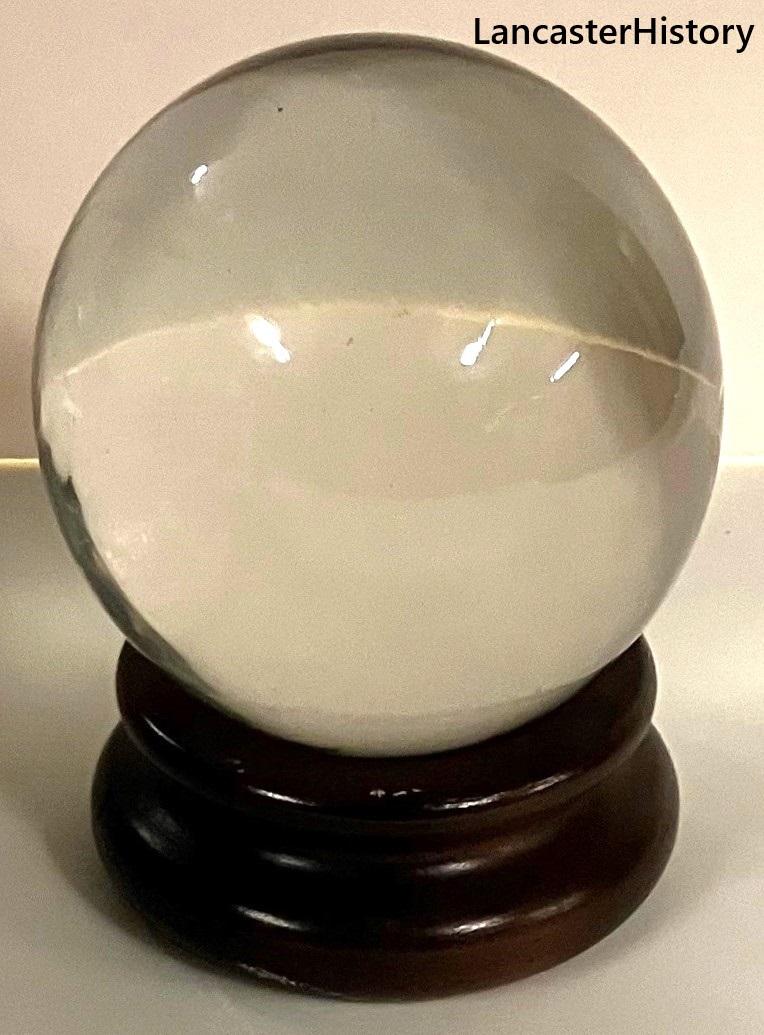
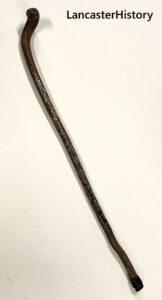
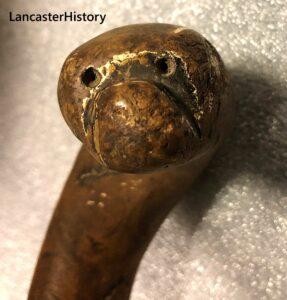
LancasterHistory has no shortage of candidates for the most unusual or strange object in our collection. Many of these objects are associated with individuals, others with events or places, and still others with ethnic traditions or folk practices. Objects that come to mind include a wig that once belonged to Thaddeus Stevens; a brick initialed by British spy John André taken from the house of Caleb Cope where André was held prisoner during the early days of the American Revolution; and objects associated with the Pennsylvania German practice of powwowing or folk healing.
A Treasured Keepsake
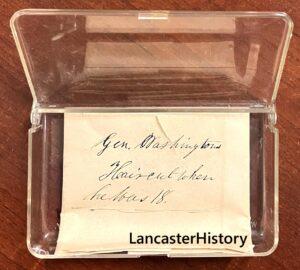
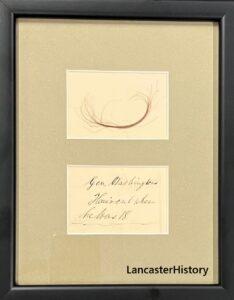
In preparing for our exhibit commemorating the 250th anniversary of the signing of the Declaration of Independence, we thought it would be interesting to exhibit a framed lock of hair labeled as being from George Washington. At some unknown time in the past someone placed the supposed lock of Washington’s hair in a folded piece of paper and labeled it with a handwritten caption reading “Gen. Washington’s Hair – cut when he was 18.” At some point, the keepsake was then placed in a small hinged plastic container to protect it from damage or loss. To ensure its long-term preservation and to facilitate display, LancasterHistory had the lock and note professionally framed using acid free materials and UV-coated glass.
Remembering George Washington
In the 18th century, a lock of hair was considered to be a treasured keepsake. This was especially true in the case of George Washington. His death on December 14, 1799 ushered in an intense period of national mourning. His death also created a market for mourning souvenirs and mementos, including paintings, ceramics, and textiles featuring images of Washington as well as symbols of death, including urns or weeping willows. These souvenirs provided a way for mourners to establish a personal connection with the departed president – and what could be more personal than a lock of hair said to be from the very man himself?
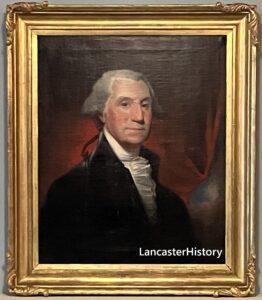
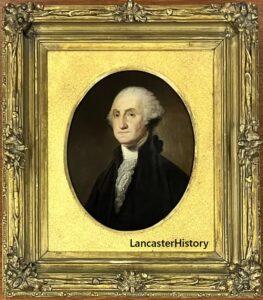
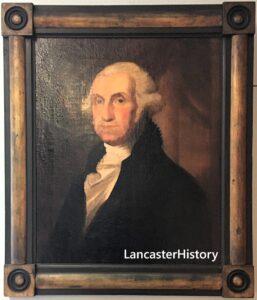
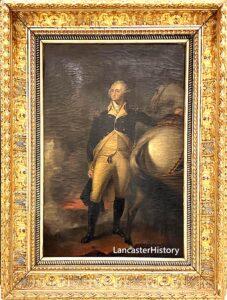
Although our collection does not include any Washington-specific mourning pieces, we do have a number of portraits painted in the decades following Washington’s death as the public demand for Washington’s image grew. In an effort to satisfy this insatiable demand, many of these posthumous portraits painted by well-known national artists were copied by local artists. LancasterHistory is fortunate to have three examples honoring his legacy as both a political and military leader.
Locks of Hair Everywhere!
The effort to establish a personal connection between Washington and those who mourned his death most likely resulted in numerous claims – both verified and unverified – of personal mementos, including locks of hair. So much so, it seems as though almost every historical society or museum, especially on the east coast, has a lock of hair believed to have come from George Washington. Some of the more well-known historical organizations that claim to have a lock of Washington’s hair include George Washington’s Mount Vernon, with over four dozen samples, including hair in jewelry; the Smithsonian’s National Museum of American History; the Museum of the American Revolution in Philadelphia; and Colonial Williamsburg. Other lesser known locations with similar claims include the McEntee Gallery of Fraunces Tavern Museum in New York City and Union College in Schenectady, New York. In the latter case, the lock of hair was found in an 18th century almanac belonging to Philip Schuyler, a founder of Union College and a close friend of Washington.
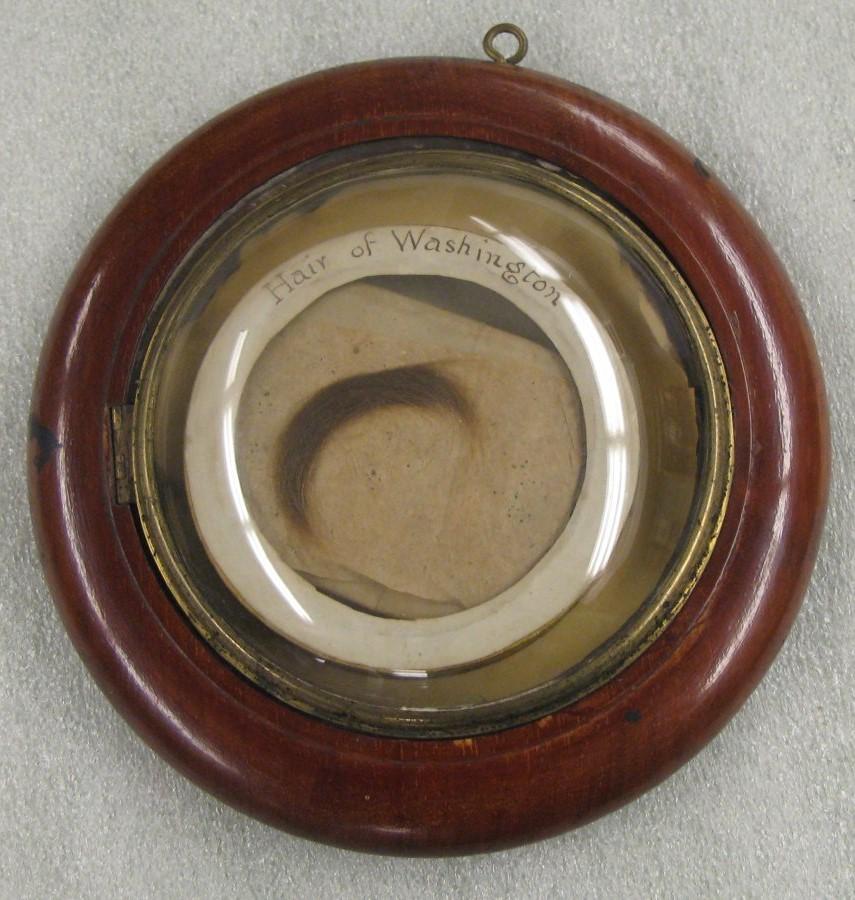
https://www.frauncestavernmuseum.org/tresses-of-the-fraunces-tavern-museum-collection-blog.
You be the Judge
So, what about our own claim to have a piece of Washington’s hair? In this case, we have more questions than answers. We don’t know who originally collected the sample, there is no clear chain of custody, and we don’t know who wrote the note on identifying the hair as belonging to Washington. Perhaps most intriguing is the notation that it was “cut when he was 18.” Born in 1732, George Washington was a well-respected member of Virginia’s planter society by 1750, but not yet famous. In 1743, he had inherited a large farm and ten enslaved people after his father’s death. At the age of 17 he was appointed official surveyor for Culpepper County where he used his position to acquire land and build his fortune; laying the foundation for the military and political career that would define his legacy.
Could this be a lock of George Washington’s hair? That’s difficult to say. Perhaps the original owner was a member of the Virginia elite and saw the potential in young Washington. Perhaps the inscription is just a case of wishful thinking. Either way, since the hair was cut, not plucked, meaning no basal cells were present, DNA testing isn’t possible. Now through the end of the year visitors to LancasterHistory can view our self-described lock of George Washington’s hair in The Spirit of ’76, our newest special exhibition located in Gerhart Gallery and decide for yourself.
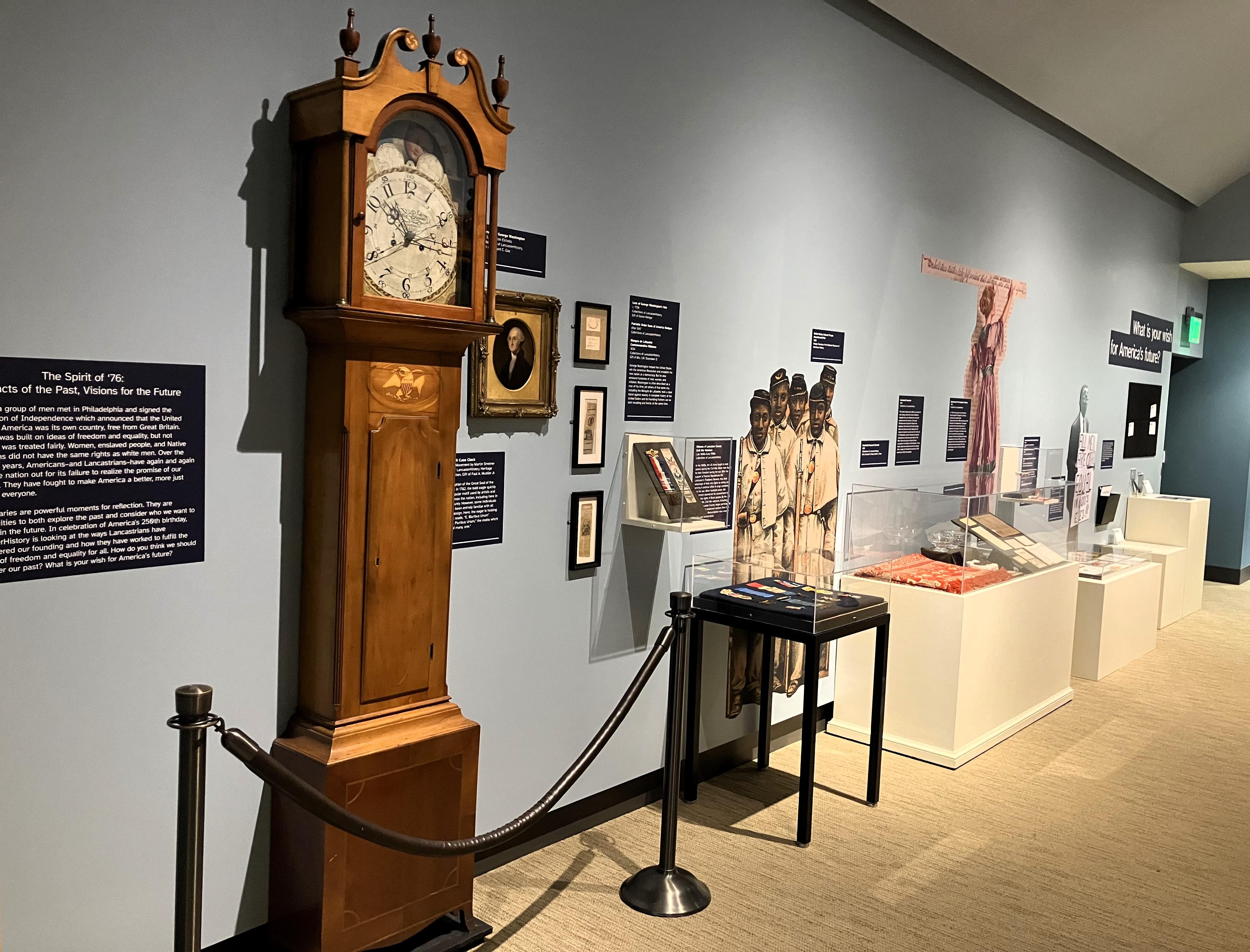
As a museum, our concern is not so much with the veracity of the claim or the monetary value of such an object, but the what the object says about the individual who saved it, the values of the society that treasured it, and the contemporary efforts of museums to connect the present to the past in a meaningful way. The association of a lock of hair with George Washington provides an opportunity to discuss Washington as an individual and as a symbol; to connect critical social, political, and economic issues from the past to similar issues in the present; and to envision how we might view and even transform the future. By fostering a dialogue on complex historical and contemporary issues, museums not only promote a sense of belonging, continuity, and tradition but encourage active engagement and debate on how we view the past, negotiate the present, and plan for the future. After all, isn’t that what museums are all about?
From Object Lessons