
About The Thaddeus Stevens & Lydia Hamilton Smith Center for History & Democracy
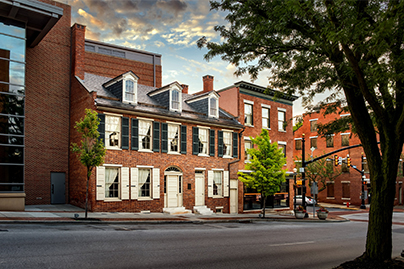 About The Stevens & Smith Center
Located at the corner of Vine and South Queen Streets in Lancaster City, The Thaddeus Stevens & Lydia Hamilton Smith Center for History and Democracy is a historic site currently under development as an interactive history museum and community education facility by LancasterHistory. At this time, the Center has a tentative opening date of 2025.
Formerly known as the Thaddeus Stevens & Lydia Hamilton Smith Historic Site, the current, working title for the site is The Thaddeus Stevens & Lydia Hamilton Smith Center for History & Democracy. The Center will include three principal components:
- the restoration, stabilization, rehabilitation, and interpretation of the home and law office of Congressman Thaddeus Stevens, as well as the tavern Stevens owned adjacent to his dwelling and office;
- a thorough reconsideration of the roles played by Stevens, Lydia Hamilton Smith, and other Pennsylvanians in Underground Railroad activities in the first half of the nineteenth century; and
- the creation of new museum galleries interpreting the legacies of Stevens and Smith and the history of the 13th, 14th, and 15th Amendments to the U.S. Constitution as the foundation for the Civil Rights Movement of the twentieth century.
Mission and values statements as well as a narrative summary for the Center are available to view. Please click here [PDF; 305kb].
We’ve also compiled a detailed summary of the project with renderings [PDF; 3.27MB]. Please note that renderings are subject to change.
How To Support
If you’d like to make a tax-deductible donation towards the Stevens & Smith Center project, please click the button below to make an online gift.
Donate to the Stevens & Smith Project
For gifts over $10,000 USD, in-kind gifts, or gifts of stock or securities, please contact Robin Sarratt, Vice President, at (717) 392-4633, ext. 117 or robin.sarratt@lancasterhistory.org.
How To Visit
While the site is not open to the public at this time, part of it may be viewed from the exterior of the building along Vine and South Queen Streets or through glass while inside the Commons on Vine Lobby of the Lancaster County Convention Center. For a closer view, check out the images below!
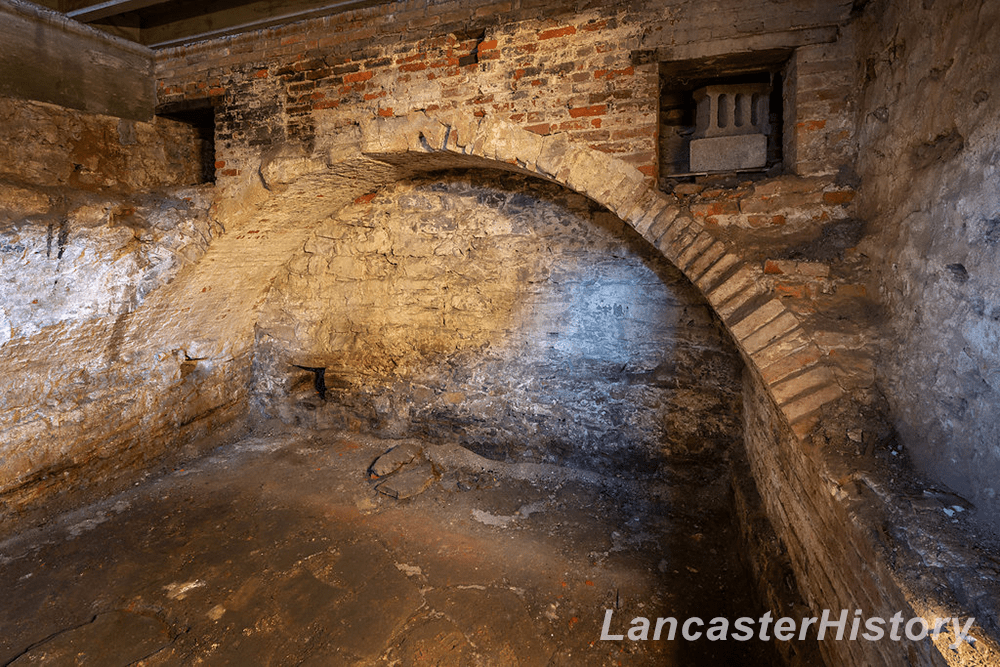
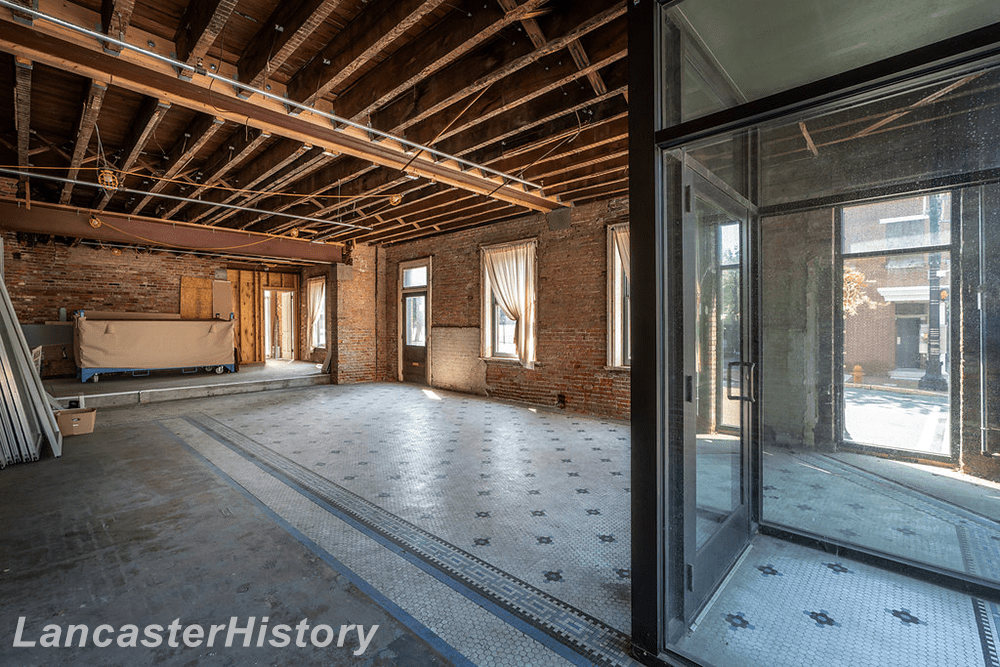
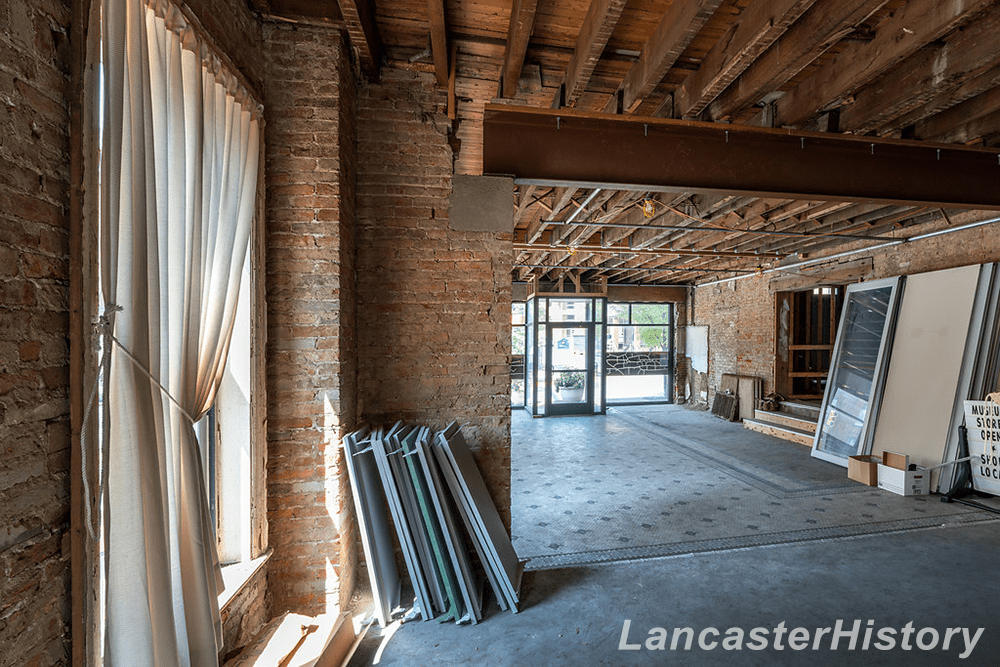
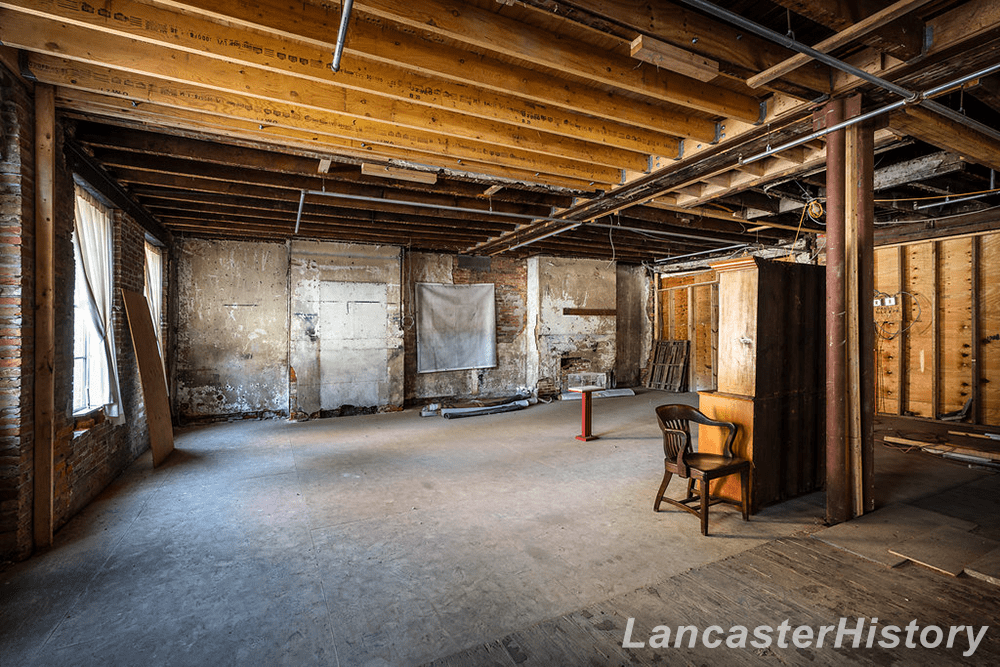
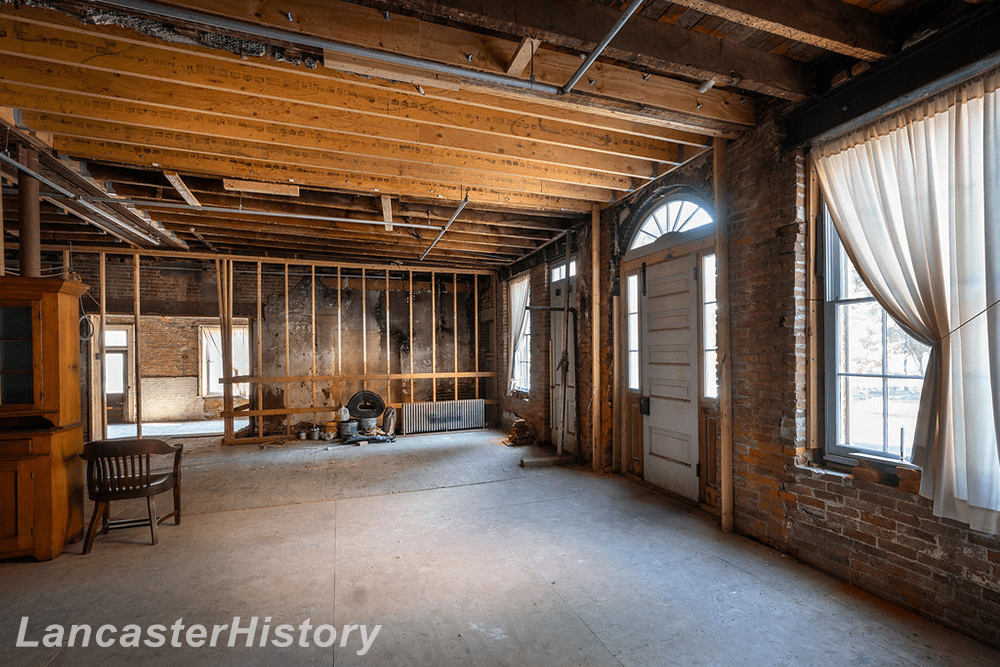
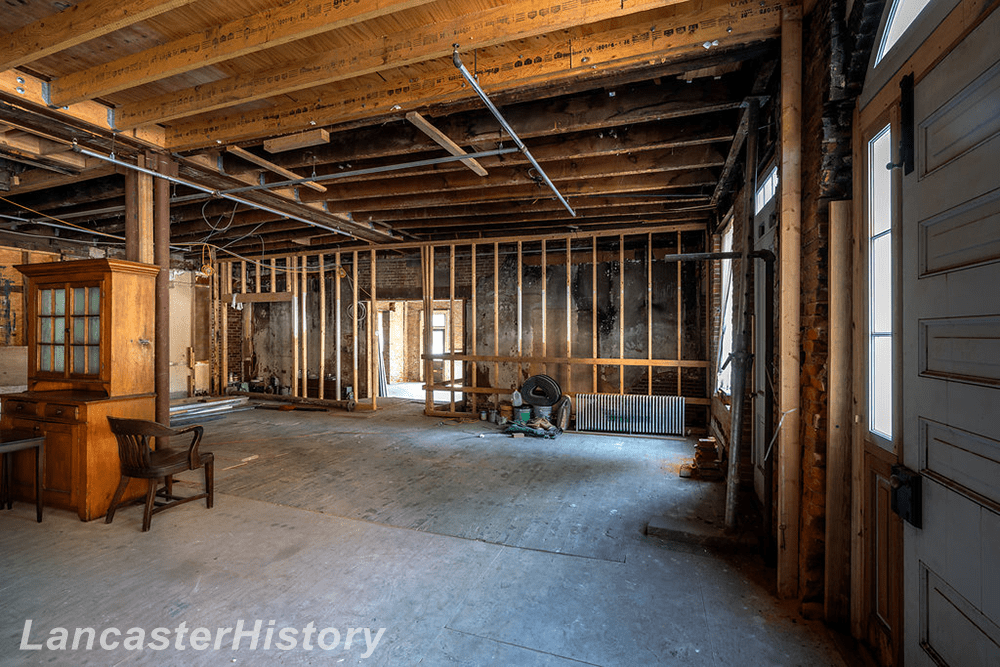
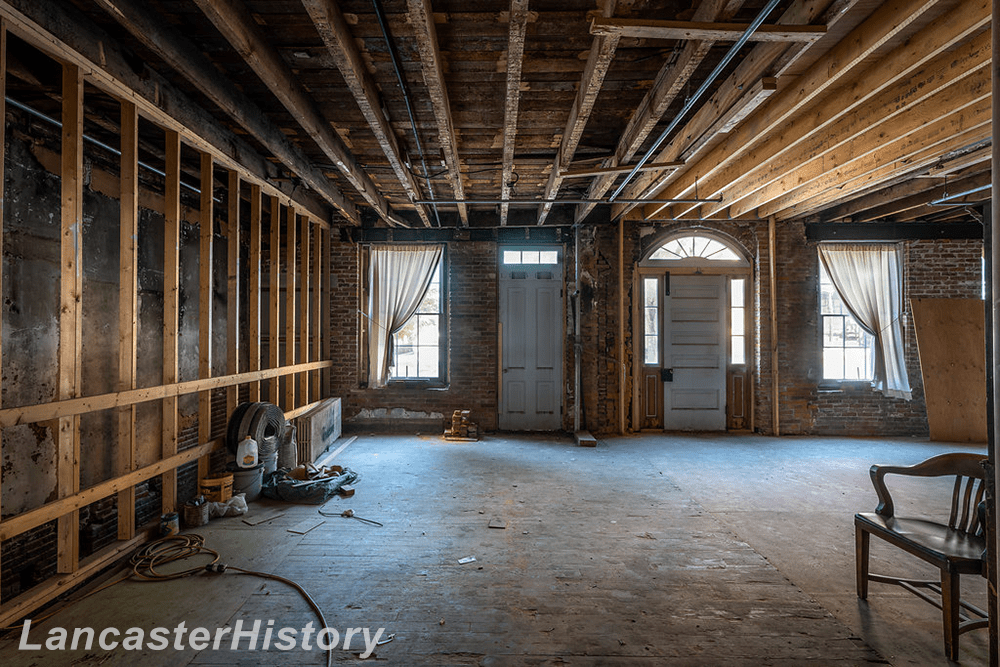
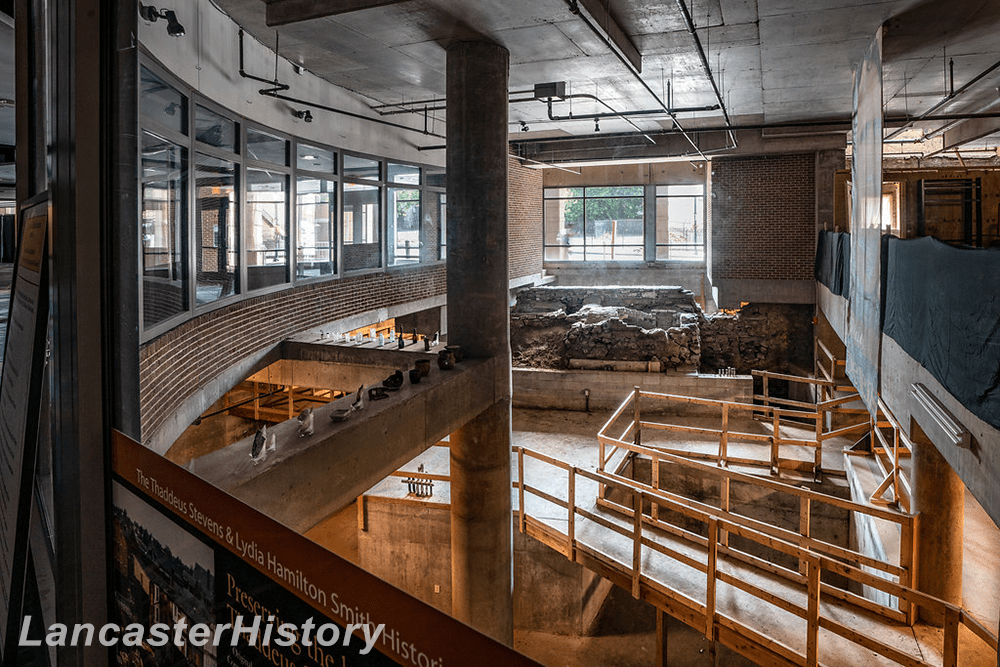
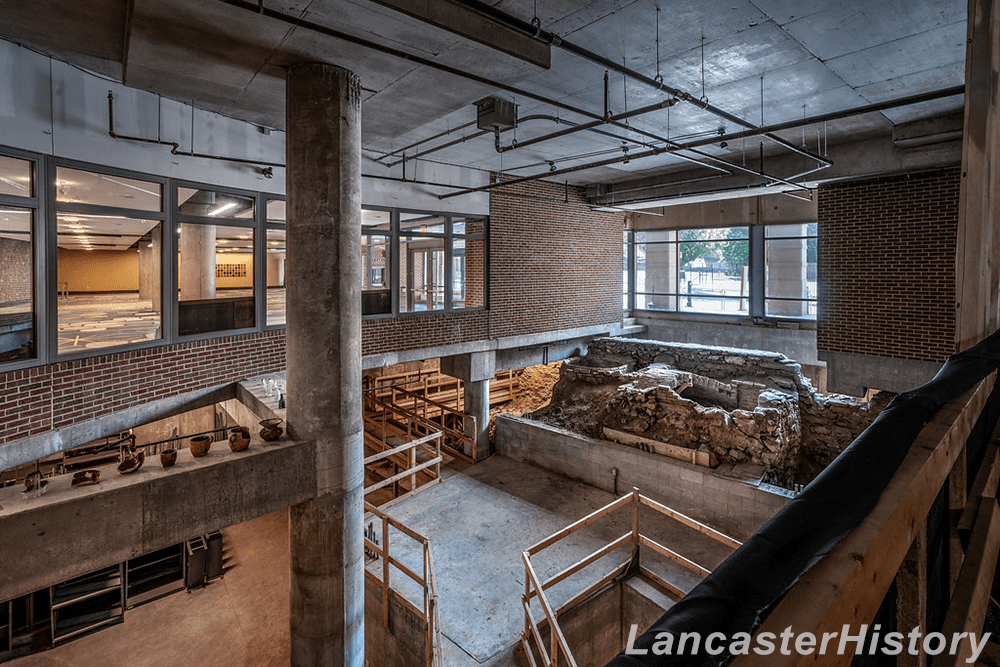
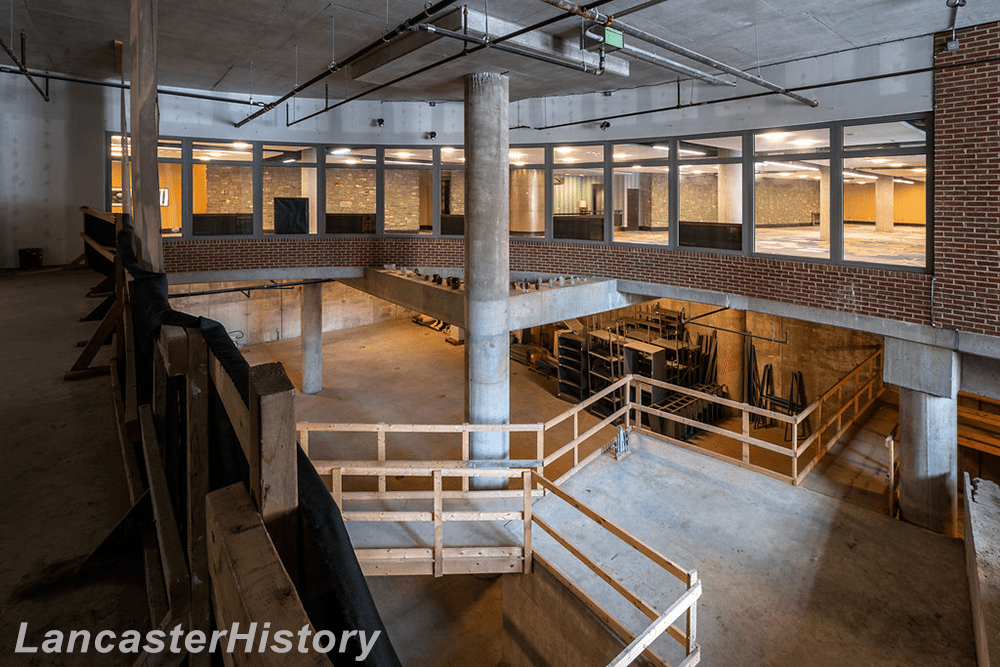
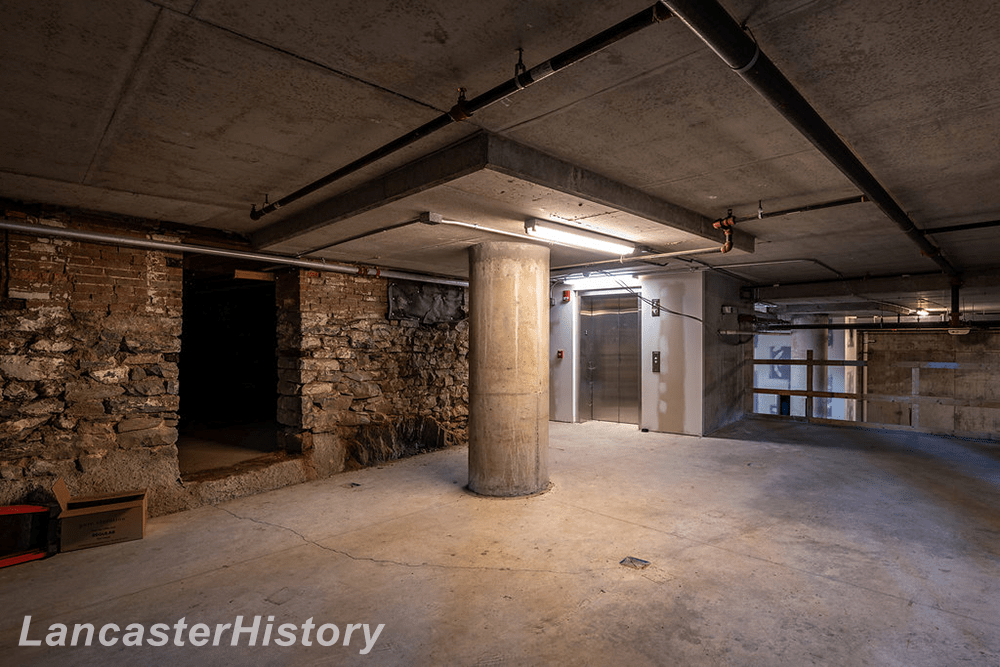
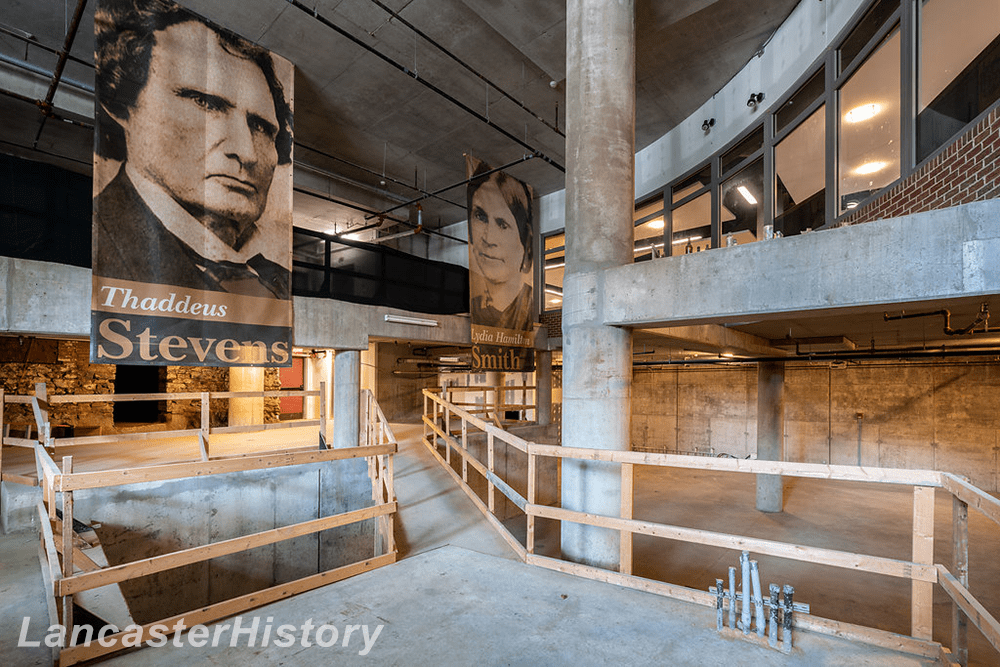
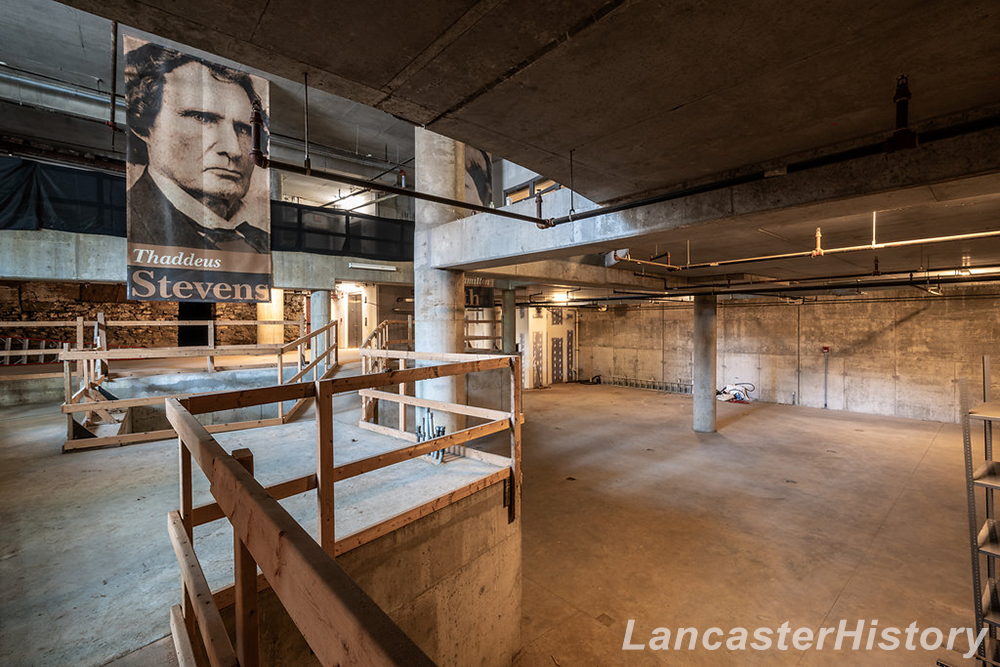
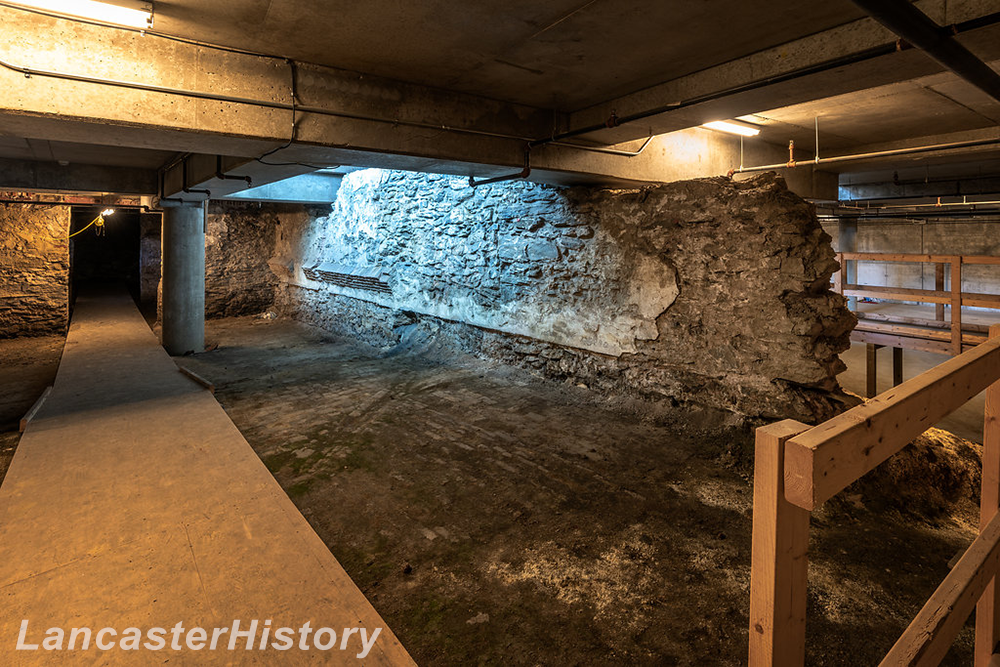
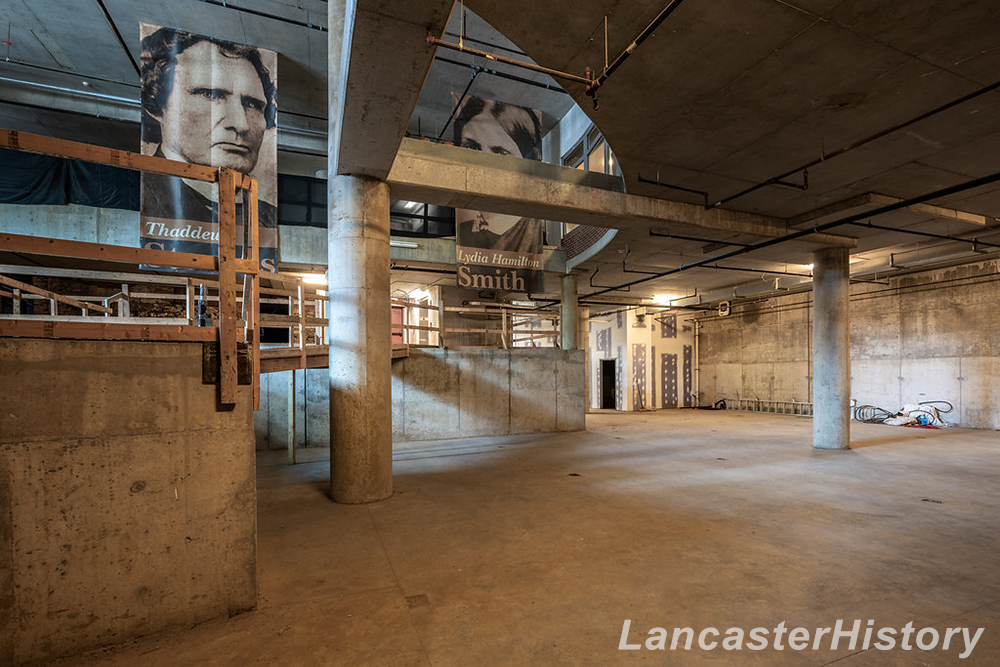
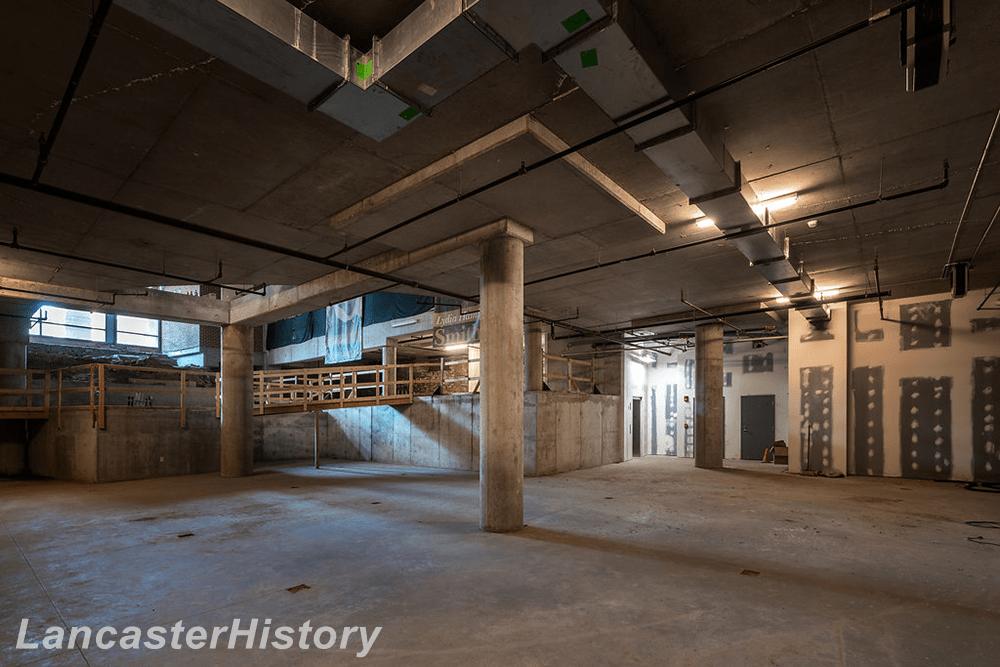
Above photos taken by Larry Lefever Photography for LancasterHistory.
About Thaddeus Stevens
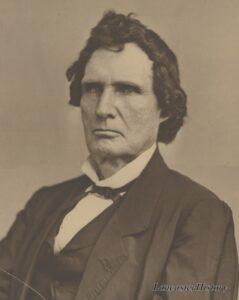 Thaddeus Stevens (1792-1868), a powerful statesman, fought in Congress and in the courtroom for the abolition of slavery and for the equality of Americans of African descent in the decades prior and during the Civil War, and in the era of Reconstruction.
His legacy is aligned with two of the great reforms of the 19th century: the establishment of free public education and the codification of the principle of equality before the law for all Americans, regardless of race.
Recent research has confirmed the long-held conviction of Stevens’ active involvement in the Underground Railroad, assisting formerly enslaved Africans by harboring them at his Lancaster, Pennsylvania property at 45 South Queen Street. Stevens’ dangerous and illegal involvement in this anti-slavery activity also extended into the streets of Lancaster and the surrounding countryside. Stevens was known to have hired and managed a group of spies to infiltrate the many groups of bounty hunters who traveled to Lancaster and to thwart their efforts to capture and return the formerly enslaved to bondage.
Learn more about Thaddeus Stevens by clicking the accordions below!
Thaddeus Stevens was born on April 4, 1792 to a poor family in rural Vermont. His father left when Thaddeus was 12, and his mother worked tirelessly to support her four young sons. Thaddeus excelled in school, paying for his own education at Dartmouth College. After graduating, he moved to Pennsylvania and opened a law office in Gettysburg in 1816. He was a brilliant debater and an instant star in the courtroom. In 1842, he moved his practice to Lancaster for better opportunities, eventually locating his home and office at the corner of Queen and Vine.
In 1835, free public schools were rare outside of New England. In states like Pennsylvania, access to classroom education was limited to children of wealthy families, or those with certain church affiliations. As a Pennsylvania State Representative from Gettysburg (Adams County), Stevens knew this widened the gap between rich and poor, and he worked with Governor George Wolf to pass Pennsylvania’s Free School Bill. But when tens of thousands petitioned against the bill, it was quickly repealed.
Stevens fought back. He persuaded his fellow legislators not merely to reverse the repeal, but to pass a new Free School Bill even stronger than the first, bringing universal public education to Pennsylvania decades before other states followed suit.
On his death bed in Washington, D.C. in August 1868, Stevens humbly proclaimed his life was "a failure," but he reasoned that his most significant accomplishment was the role he played in establishing and ultimately preserving free public education in Pennsylvania.
“When I reflect how apt hereditary wealth, hereditary influence, and perhaps as a consequence, hereditary pride, are to close the avenues and steel the heart against the wants and rights of the poor, I am induced to thank my Creator for having, from early life, bestowed upon me the blessing of poverty.”
- Stevens during his speech before the Pennsylvania House
On September 11, 1851, Maryland resident Edward Gorsuch tracked four men he had formerly enslaved into Christiana, PA, about 20 miles southeast of Lancaster. George Hammond, Joshua Hammond, Nelson Ford, and Noah Buley had fled captivity almost two years earlier, but Gorsuch had recently been tipped off to their whereabouts. When Gorsuch and his posse of six arrived in Christiana, they were met by dozens of African American men and women, some of them armed. In the confrontation that followed, gunfire was exchanged, Edward Gorsuch was killed, and several others were wounded.
In the aftermath, a force of U.S. Marines and police descended on Christiana, making wholesale arrests. By then, the four formerly enslaved men had made their way to Canada. Those arrested—including 27 Black men and three white men—were charged with treason for defending the freedom seekers. Thaddeus Stevens was one of three attorneys defending the accused. They were tried at Independence Hall in Philadelphia, and all were either acquitted or had their charges dropped. The trial was a national sensation, weakening the Fugitive Slave Law and deepening tensions between Northern and Southern states as the country headed towards civil war.
“I can never acknowledge the right of slavery. I will bow down to no deity … whose footstool is the crushed necks of the groaning millions, and who rejoices in the resoundings of the tyrant’s lash, and the cries of his tortured victims.”
- Thaddeus Stevens in a letter, 1838
Stevens played a leading role in American politics before, during, and after the Civil War. He was involved with the Underground Railroad, and as a congressman, he was tireless in his efforts to free enslaved people and end racist policies. Stevens’s political skills and ideas were critical to ensuring passage of the 13th, 14th, and 15th Amendments—which abolished slavery, expanded U.S. citizenship, and secured voting rights for millions of men of African descent.
In 1863, just a few days before the Battle of Gettysburg, Confederate General Jubal Early and his men paid a visit to Stevens’s ironworks business in Caledonia, PA. Early ordered it burned—along with the homes of some 200 employees and their families—as payback for Stevens’s work to end slavery. Luckily, Stevens wasn’t there. If he had been, General Early declared, Thaddeus would have been “hung on the spot.”
"Where the crusading zeal of most young men slips into apathy, sours into disillusion, or simply changes to a serenity that accepts the world for what it is, with Thaddeus Stevens the fight was never fiercer than in the year he died at seventy-six.”
- Fawn M. Brodie, Thaddeus Stevens: Scourge of the South, 1959.
Today’s historians agree that Thaddeus Stevens led the charge on many issues of social justice. But in the late 1800s and early 1900s, this meant that Stevens was often cast as a scheming extremist: “…the most deplorable, malevolent, and morally deformed [person] who has ever risen to high power in America,” as the scholar James Truslow Adams characterized him in The Epic of America.
Thomas Dixon's 1905 novel, The Clansman, also smeared the reputations of Congressman Stevens and Mrs. Smith. First staged as a live play performed across the country and later adapted as an early silent film called Birth of a Nation (1915), the novel and its adaptations were works of blatantly racist propaganda that brought about the resurgence of the Ku Klux Klan by the 1920s.
Birth of a Nation is considered to be the world's first motion picture epic, and the first film to be screened at the White House. The film's main antagonists were thinly veiled characters modeled after Congressman Stevens and Lydia Hamilton Smith.
Through most of the 20th century, Stevens’s popular reputation never truly recovered. Even here in Lancaster, where Stevens lived during the most important years of his career, his story and accomplishments are not well known. Misguided characterizations and outright falsehoods negatively influenced and delayed efforts to retain and preserve Stevens' Lancaster properties until the 2000s.
When Thaddeus Stevens died in 1868, he was the most influential politician in America and beloved by millions. While April 2022 marks 230 years since his birth, the issues he championed—like racial equality and voting rights—are as relevant today as they were then.
“By the lowly, the poor, the oppressed, or wherever the heel of the strong and powerful is felt, Thaddeus Stevens will be loved and revered.”
- Lancaster Examiner and Herald, March 18, 1863
About Lydia Hamilton Smith
 Lydia Hamilton Smith (1815-1884), an accomplished mixed-race businesswoman in her own right, was Stevens’ house manager and confidant for 20 years, managing the intimate details of his familial and personal life.
Following Stevens’ death, Mrs. Smith prospered as an entrepreneurial woman with successful hotels and boarding houses in three cities, an accomplishment made all the more remarkable by the discrimination she faced due to both her gender and race.
Among history’s most influential Lancastrians, Lydia Hamilton Smith is also one of the least known. As a woman of color in the 1800s, much of her life was not well documented, leaving today’s historians with more questions than answers. But the answers we do have make one thing clear: Mrs. Smith was an exceptional woman who wasn’t afraid to challenge social conventions.
Learn more about Lydia Hamilton Smith by clicking the accordions below!
The mystery of Lydia Hamilton Smith starts with the year of her birth. Some historians believe it was 1813, the date on her tombstone. Others maintain that Lydia was born in 1814. Perhaps the most widely accepted is the year stated on her death certificate and in at least four newspaper obituaries published in Washington, D.C. and Lancaster: 1815.
Smith’s mother, who was known as Mrs. O'Neill, was of mixed-race ancestry. Smith's father is believed to have been Enoch Hamilton, an Irish immigrant who employed Lydia’s mother in a tavern near Gettysburg.
Lydia was frequently described as a “mulatto” or “octaroon,” terms historically used to describe people of mixed racial descent. Her obituary in the Lancaster Daily Intelligencer described her as a “colored woman.”
At about the age of 20, Lydia married Jacob Smith, a barber and musician. The couple had two boys, William and Isaac, while living in Harrisburg. By several accounts, Jacob Smith was abusive, and Lydia chose to be separated from him. In 1844, Mrs. Smith moved to Lancaster to take the job as Thaddeus Stevens’s housekeeper, with her two sons accompanying her. Jacob Smith died shortly thereafter.
As housekeeper to Thaddeus Stevens for 24 years, Mrs. Smith played a much larger role in Stevens’s life than her title suggested. She attended social events with Stevens, admitted (or refused to admit) visitors, and helped to manage his business concerns. Stevens sold Mrs. Smith her first property in Lancaster for $500 in 1860. After that, she began investing in property on her own. Over time, she acquired several rental properties and boarding houses in Lancaster, Philadelphia, and Washington, D.C.
There’s no debate that the relationship between Smith and Stevens was one of friendship among equals. What is unclear is whether their relationship ever became romantic. If you’ve seen Steven Speilberg’s Lincoln, you might remember that the film portrays the two as lovers (as other books and movies have). But, the evidence is elusive.
While many contemporaries suspected Smith and Stevens were romantically linked, most of those who held that opinion were political enemies. They used the story to undercut Stevens’s reputation, as interracial relationships were taboo at the time.
But it wasn’t just enemies who made the claim. Stevens had close friends and supporters who also implied the two were more than friends. The Abolitionist cleric, Reverend Jonathan Blanchard, for example, described Smith as “the woman who had taken care of him for more than twenty five years [as] a wife.”
Mrs. Smith donated $500 for the perpetual care of Stevens' grave in Shreiner-Concord Cemetery in Lancaster. As a life-long practicing Catholic, Mrs. Smith's remains were buried in Saint Mary's Cemetery in Lancaster along with her two sons.
Even in Northern states like Pennsylvania, where slavery was outlawed or on the decline by the late 1700s, helping freedom seekers was a federal crime. This didn’t stop Thaddeus Stevens, who organized a network of spies to monitor Southern bounty hunters and warn freedom seekers and other participants in the Underground Railroad.
Modern archaeological digs beneath the home of Smith and Stevens on Queen and Vine have uncovered a cistern with a human-sized hole cut in it. Cisterns were sometimes used as hiding places at other Underground Railroad stations, and perhaps Stevens’s cistern served the same purpose.
In 2011, the site was listed on the National Underground Railroad Network to Freedom, based on a well-documented visit by freedom seekers in 1848 whom Stevens assisted.
While Mrs. Smith’s role is not documented, it’s logical that as Stevens’s house manager and confidante, Mrs. Smith knew freedom seekers were being sheltered under her feet. And, local oral tradition has long held that Mrs. Smith was a conductor on the Underground Railroad. Concrete proof of Mrs. Smith’s involvement is lacking. The closest evidence we have is the fact that Mrs. Smith left money behind to several known conductors.
The last years of Stevens’ life were some of his most important politically, but he was severely ill. Mrs. Smith cared for him around the clock—administering medicines, feeding him, and helping him dress. She also accompanied him on his trips to Washington. Stevens’s physician, Dr. Henry Carpenter, said that Stevens’s life “was prolonged six or eight years by faithful nursing and close attention … [Smith] devoted the best period of her life to him.” Because of that care, Stevens was able to champion the passing of the 13th and 14th Amendments and spearhead the country’s Reconstruction after the Civil War.
Throughout her life, Mrs. Smith owned rental properties, negotiated contracts, ran businesses, filed lawsuits, and won court cases. And, she did all of this as a single woman of color—at a time when women were denied rights granted to men, and Black Americans were denied rights granted to white Americans. Born to a poor mother, denied access to formal education, and discriminated against for her gender and race, Lydia Hamilton Smith still rose to become a successful, influential, and wealthy individual by any standard of her time.
Lydia Hamilton Smith moved in high society, mingled with the nation’s most important politicians, and amassed significant wealth. Nevertheless, there’s much about her that we still don’t know. The research continues...
About the Underground Railroad
The Underground Railroad was a physical, social, and political movement of self-liberation by people of African descent, often assisted by free people of color and white people. It was a movement about movement — people of color seeking their freedom by moving on their own or being transported by a variety of means by others who were sympathetic to them.
Interested in learning more about the Underground Railroad in Lancaster County? LancasterHistory offers private, custom Origins of the Underground Railroad in Lancaster County tours for small groups and buses. To learn more, please visit our Group, Bus, and Private tours page.
Stay In Touch
Want to receive future updates about The Thaddeus Stevens & Lydia Hamilton Smith Center for History and Democracy? Subscribe to our free email list! You will receive updates, invites, and more from across the LancasterHistory organization. You can unsubscribe at any time and your information will never be sold.