
Peter Harting, The Coverlet Weaver
Coverlets vs. Quilts
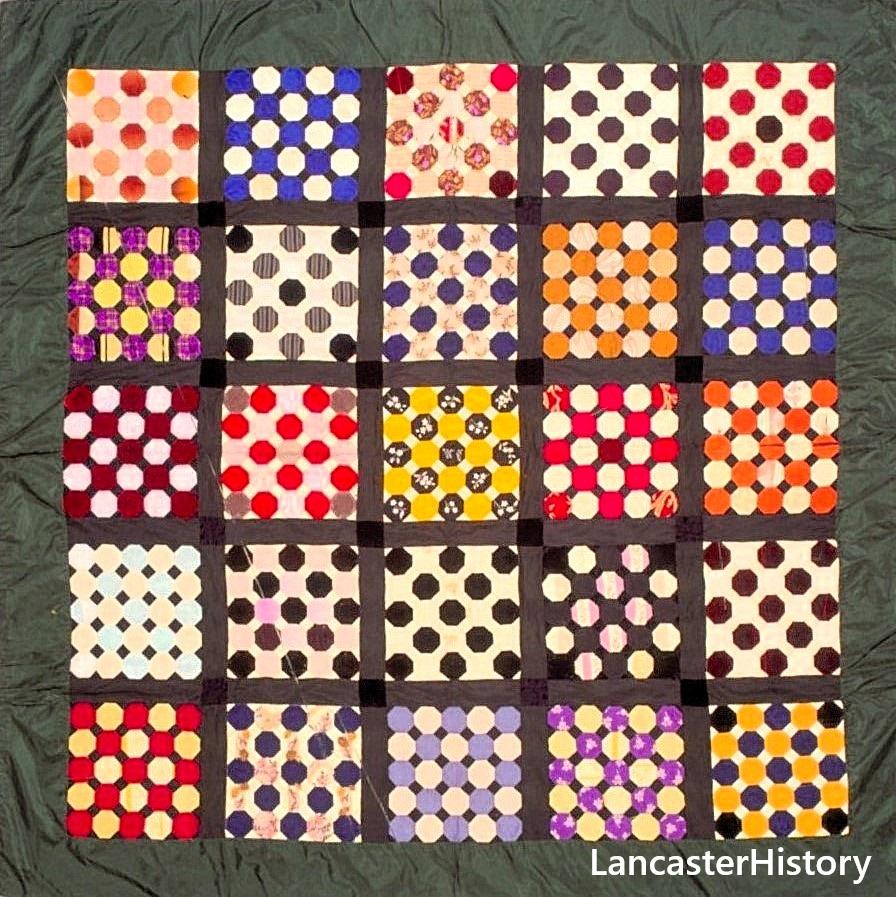
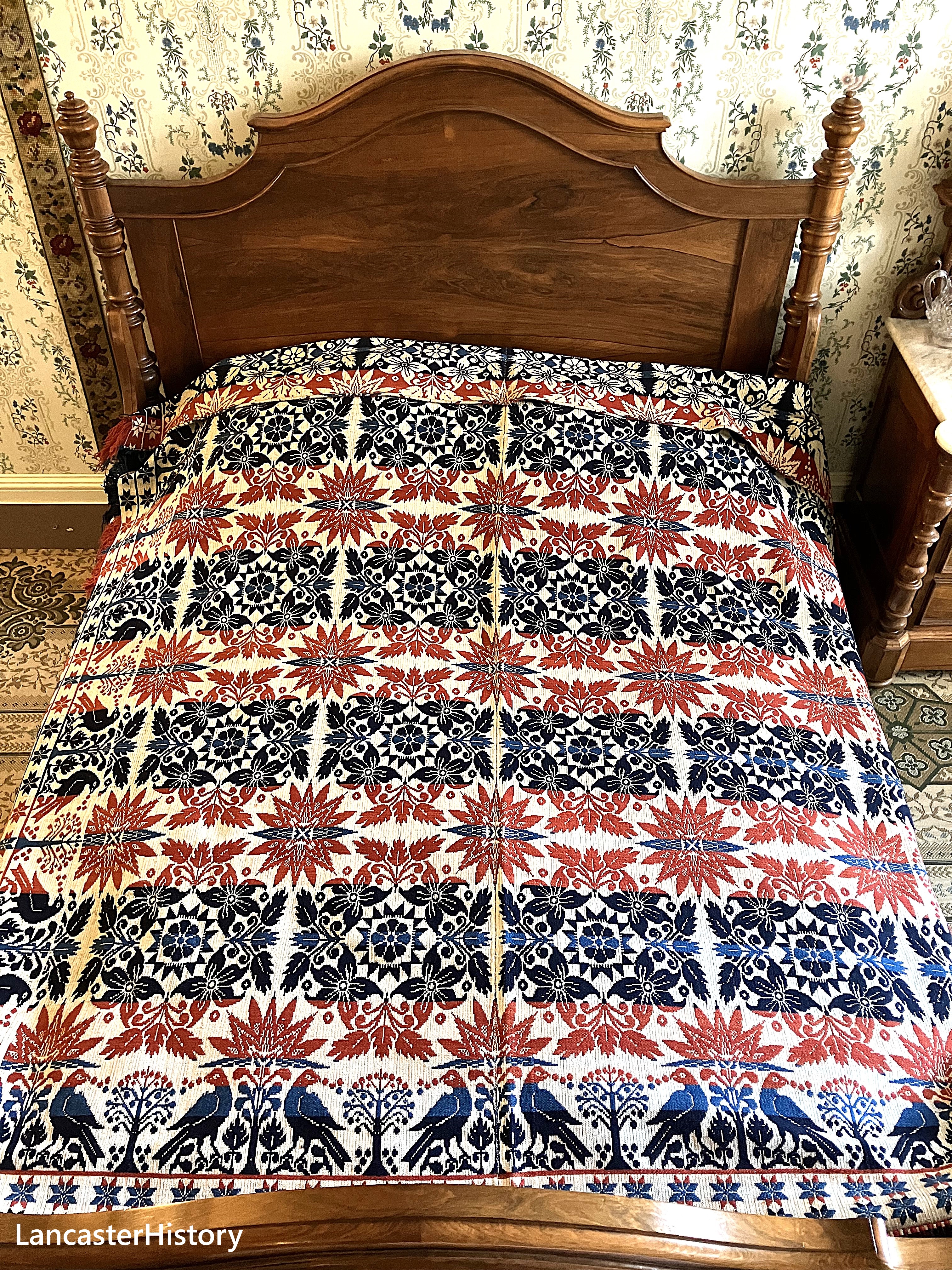
The LancasterHistory object collection includes a number of nineteenth-century coverlets woven by various weavers from around the county and the surrounding area. Like a quilt, a coverlet is intended as a bedcover; however, there are some important differences. Whereas a quilt consists of three assembled parts – a decorative top, a middle layer of batting, and a backing fabric – a coverlet consists of a single layer woven on a loom. Another important difference is that coverlets, unlike quilts, are reversible and intended for use on either side.
Jacquard Coverlets
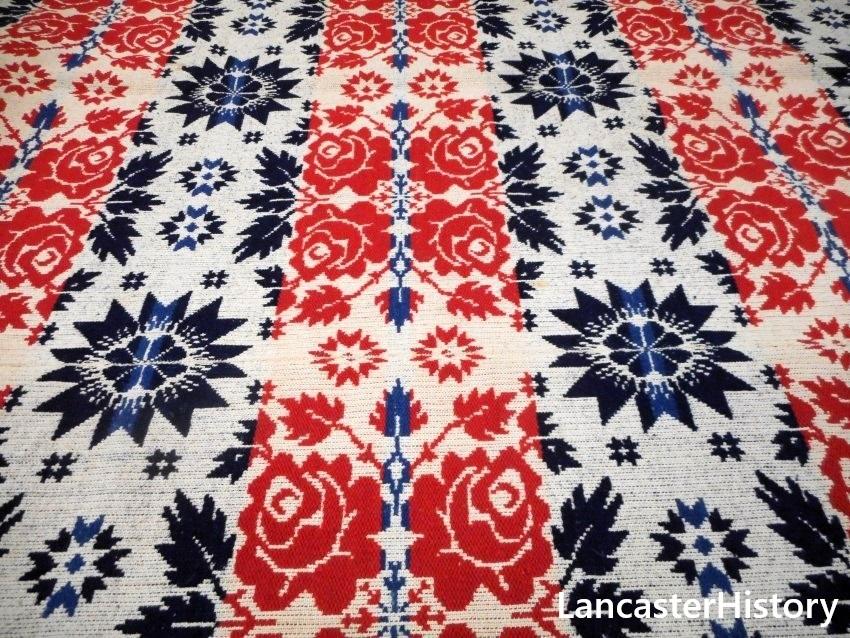
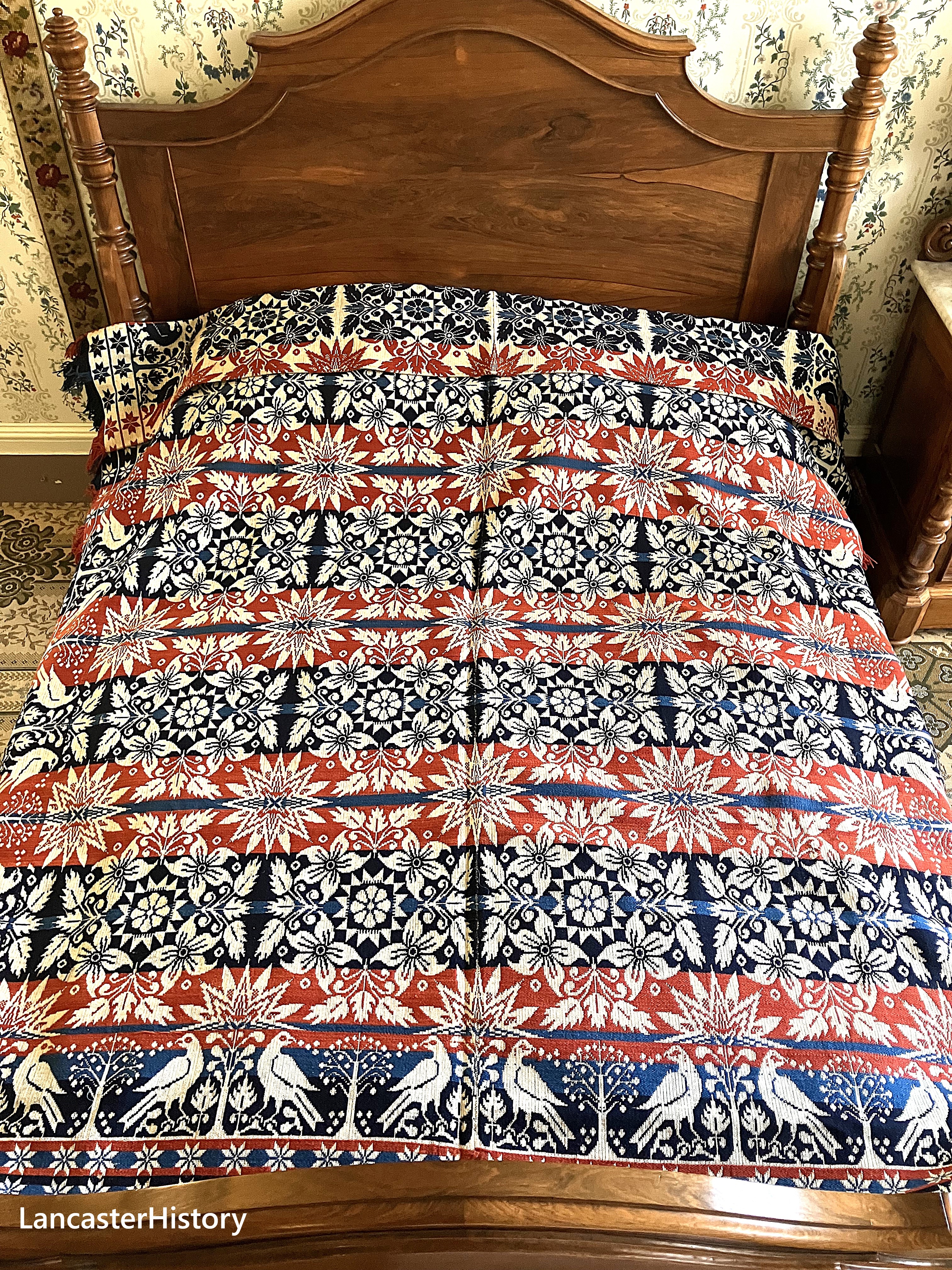
The majority of coverlets in the LancasterHistory collection are made of a combination of wool and cotton and include patterns featuring stars, flowers, and animals woven in vibrant colors of red, white, and blue. Professional weavers used Jacquard looms to produce these complex weavings. Invented by Joseph Marie Jacquard in 1803, this type of loom utilized a series of punch cards to determine which cords of the fabric warp should be raised for each pass of the shuttle. This innovation allowed weavers to produce a variety of patterns and colors by simply changing the sequence of cards. Because of the size of the loom, the completed coverlet consisted of two pieces joined by a center seam.
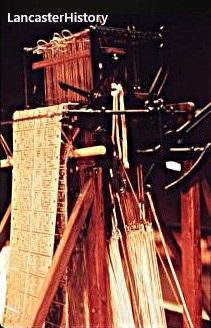
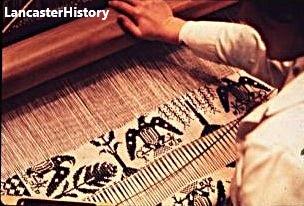
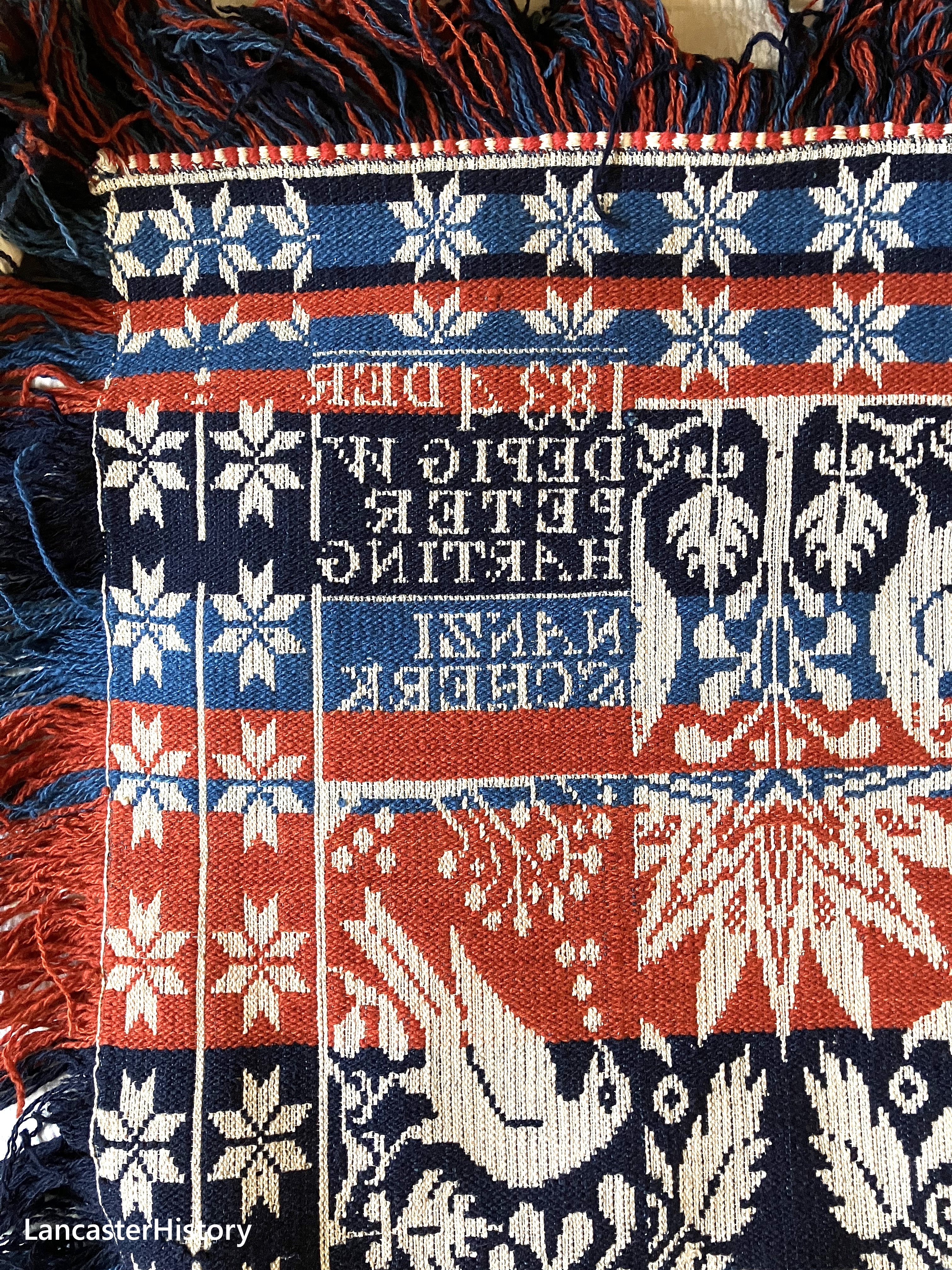
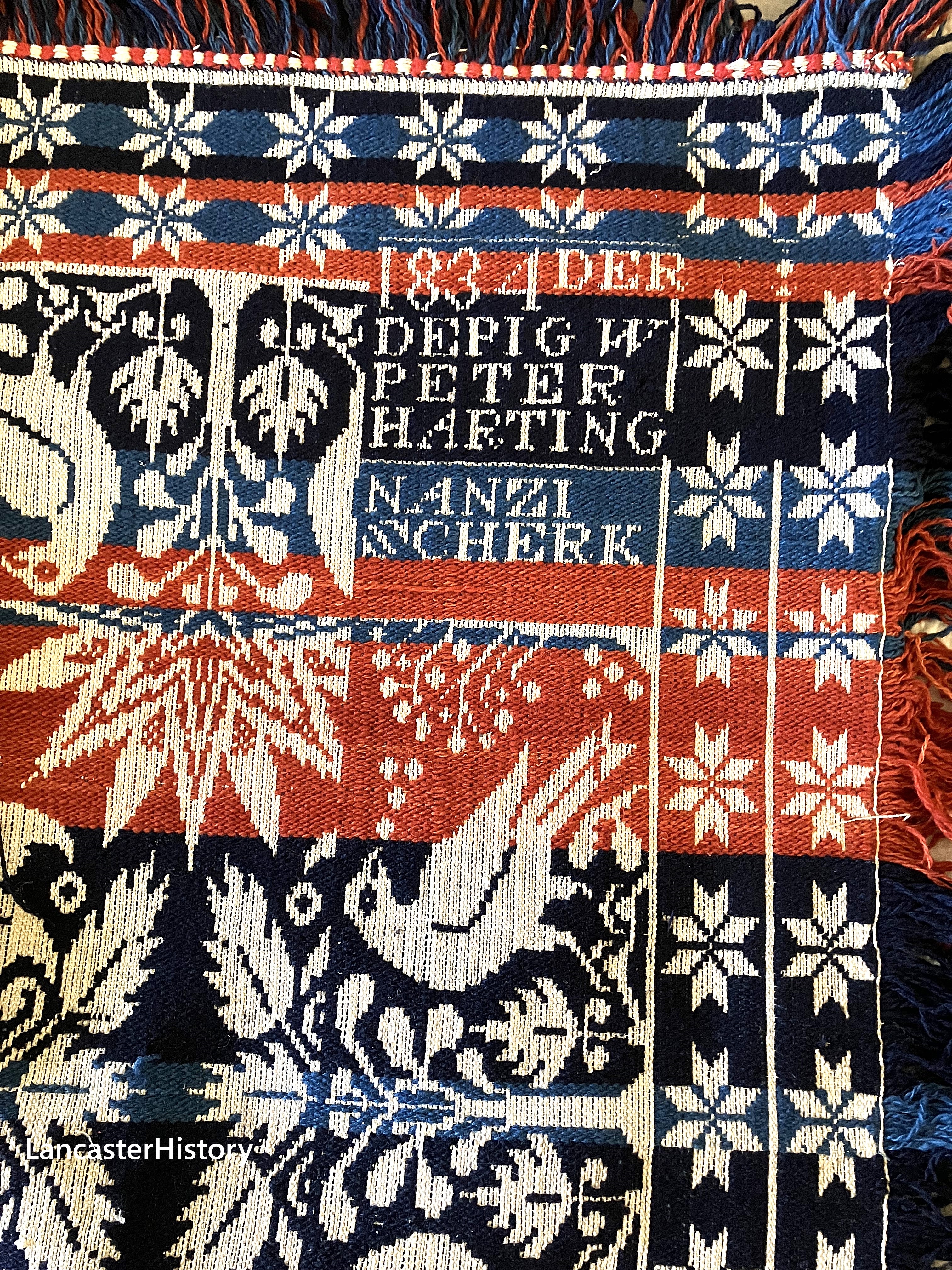
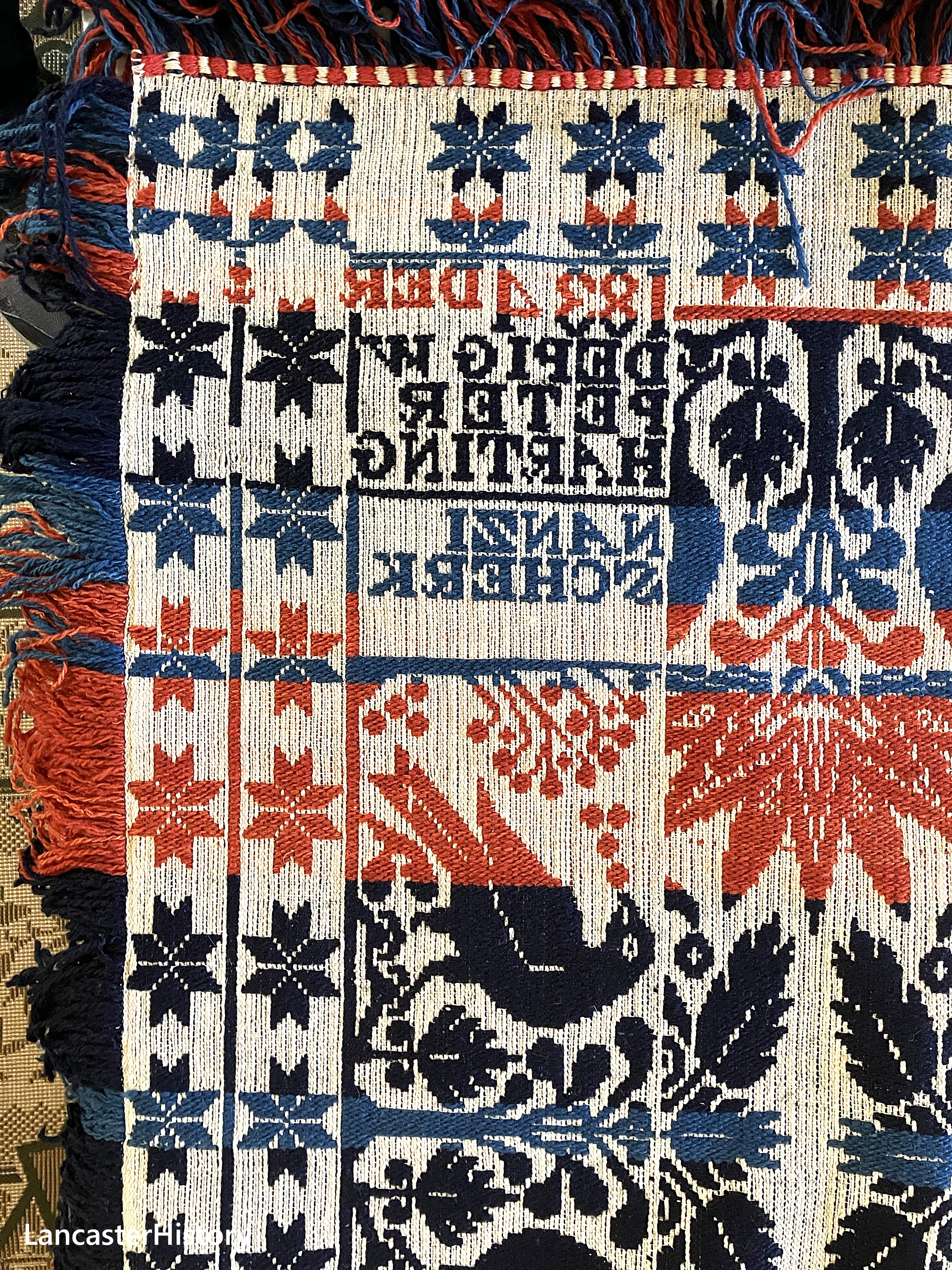
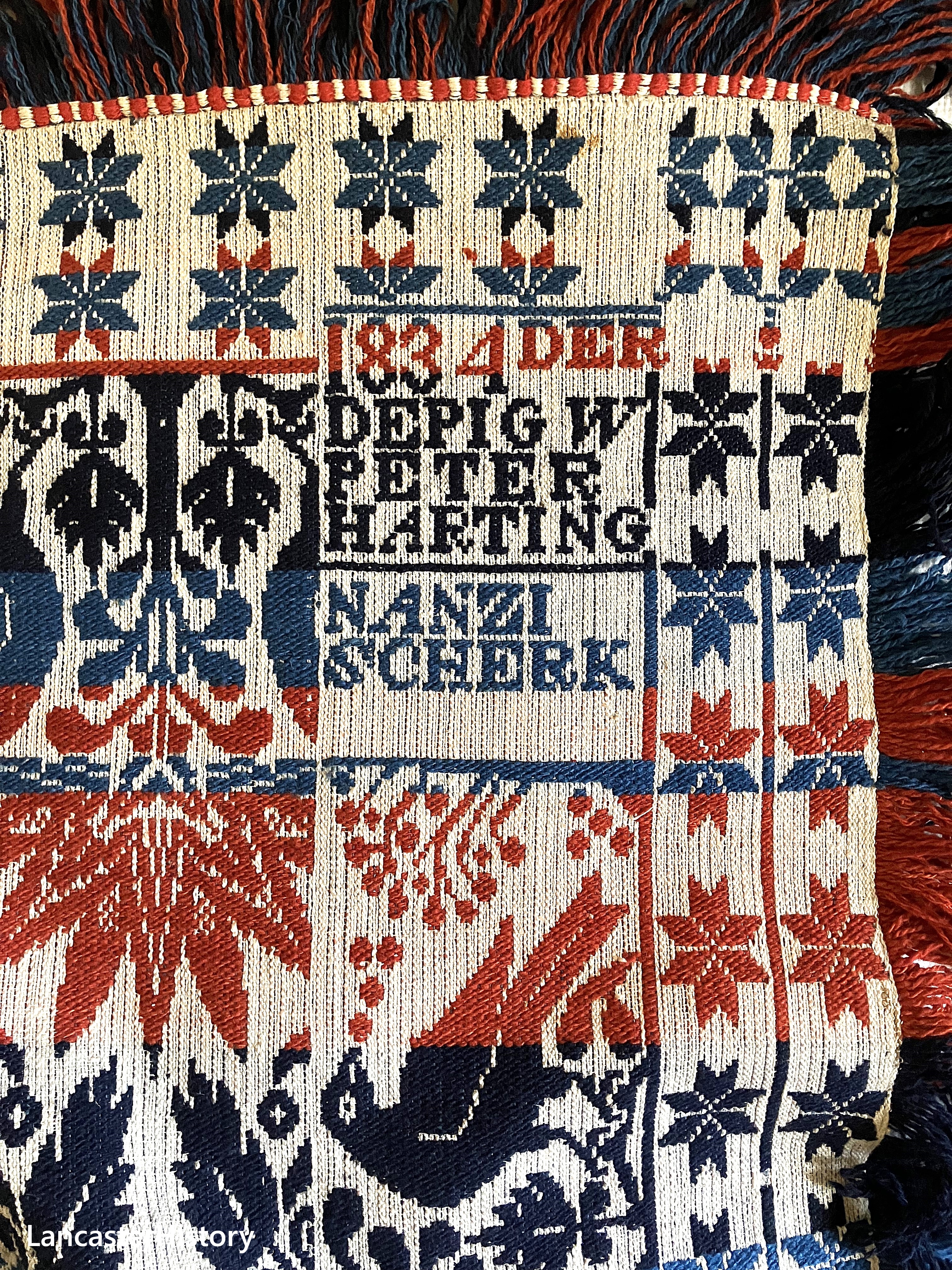
The use of punch cards in Jacquard-produced coverlets allowed weavers to produce intricate patterns as well as inscriptions that can be read from either side. These inscriptions often included the name of the maker, his location, and the year of manufacture, as well as the name of the person it was made for. Sometimes the coverlet also included a certain word or phrase particular to that weaver. These inscriptions might appear as a corner block or in linear fashion along an edge. Because a coverlet consists of only one layer and can be displayed with either side showing, the inscription is always woven backwards and forwards so that it can be read no matter which side is shown.
The Work of Peter Harting
LancasterHistory recently acquired a Jacquard-produced coverlet woven in 1834 by Peter Harting (1799-1864) for Nanzi Scherk. This particular bedcover features a number of motifs typical of Lancaster County produced coverlets. These design elements include a five-petal lily repeated four times in a circular format around an eight-pointed rosette, a standalone sixteen-point star, and a repeated distelfink and tree-of-life design along the bottom inner border, as well as an outer border that also features a repeated pattern of eight-pointed stars. As in this example, some of the corner blocks in Harting’s coverlets also included the phrase “Der Depig W,” loosely translated from the German as “The Coverlet Weaver.”
Where in the World is Peter Harting?
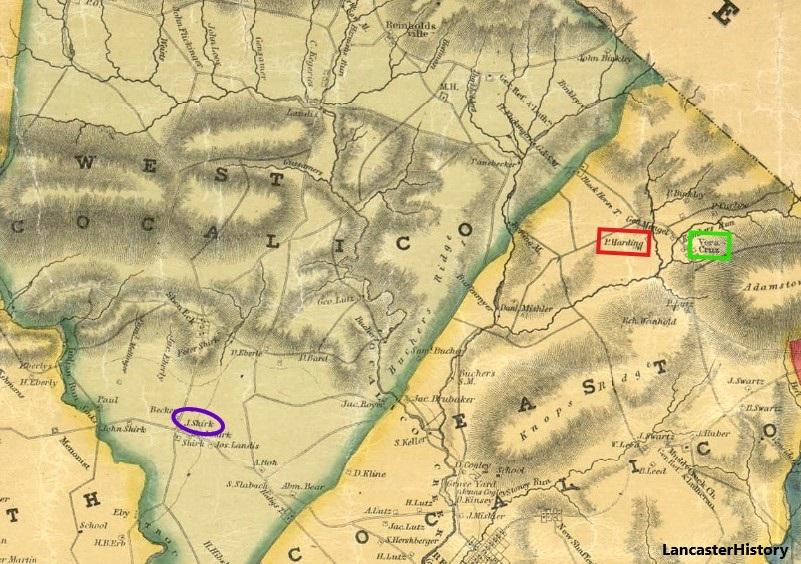
Although this particular coverlet does not include a location, the 1840 Pennsylvania census lists Harting as a resident of East Cocalico Township. The 1851 Map of Lancaster County, Pennsylvania shows that Harting (shown in red) lived near the town of Vera Cruz in East Cocalico Township (shown in green). On this map, the German name of Harting appears as the more English-sounding Harding. Because some German names might also be spelled phonetically or as they might appear in German, some coverlets woven by Harting are signed “Hartung.”
The corner block on the 1834 quilt woven by Peter Harting for Nanzi Scherk appears to have been made for Nancy Nauck Shirk (1793-1871). She married Jacob Shirk (1787-1862) in 1811. The Shirks lived in West Cocalico Township (shown in purple). Both Nancy and Jacob Shirk are buried in Steinmetz Cemetery in Schoeneck, West Cocalico Township. Peter Harting is buried in the cemetery of Swamp Church in Reinholds, also in West Cocalico Township. The stones for both Nancy and Jacob Shirk as well as for Peter Harting and his wife Catharina Jake Harting (1805-1863) are inscribed in German.
From Object Lessons